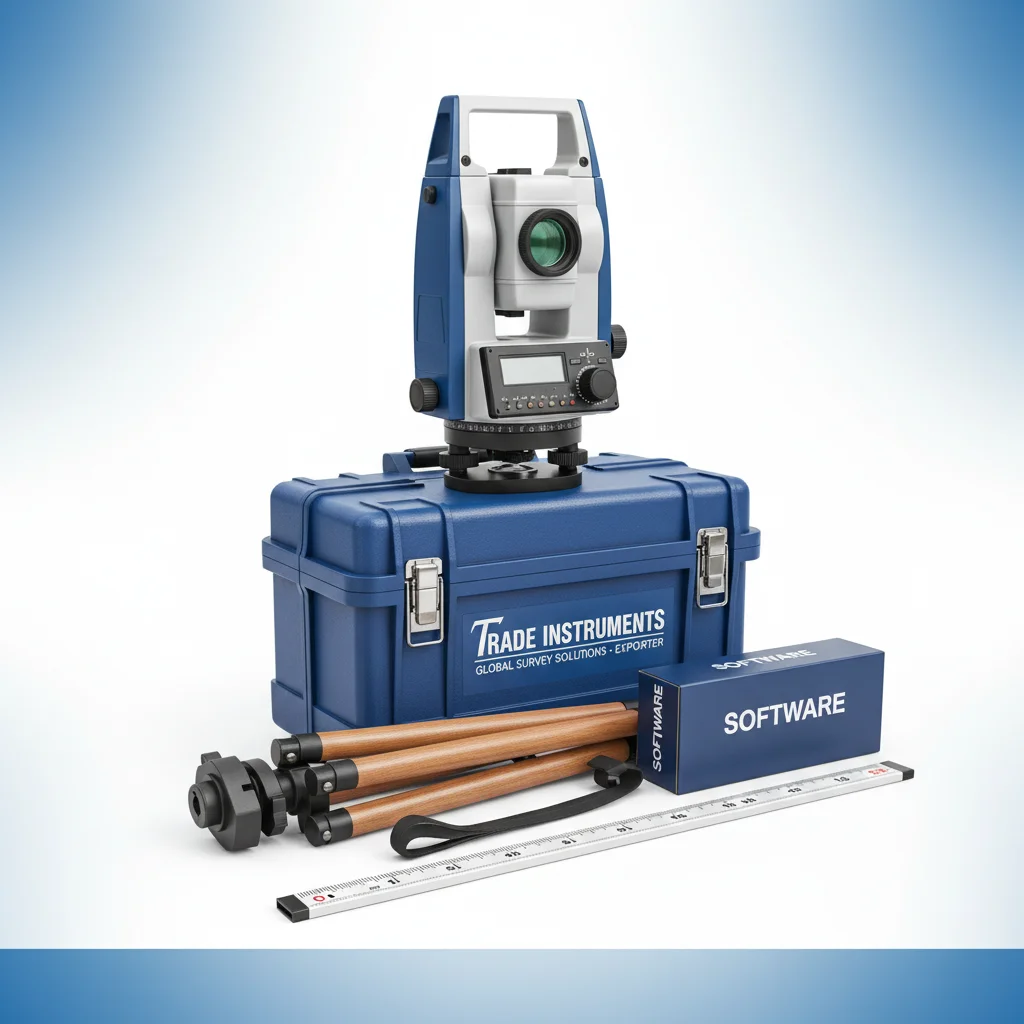
In the modern era of precision engineering, the demand for centimeter-level accuracy has transformed the way we approach mapping, construction, and autonomous navigation. A professional gnss rtk receiver service provides the critical infrastructure needed to bridge the gap between standard satellite positioning and the extreme precision required for industrial applications, ensuring that every coordinate recorded is a true reflection of reality.
Across the globe, industries are shifting toward automated workflows where human error is minimized through high-fidelity spatial data. Whether it is in the synchronization of autonomous excavators or the precise seeding of vast agricultural tracts, the integration of a robust gnss rtk receiver service allows operators to achieve unprecedented efficiency and reduce material waste, directly impacting the bottom line of large-scale operations.
Understanding the nuances of Real-Time Kinematic (RTK) technology is no longer just for surveyors; it is essential for any business utilizing Machine Control Systems or UAV Platforms. By leveraging a sophisticated gnss rtk receiver service, organizations can ensure stability in challenging environments, maintaining a reliable positioning lock that supports long-term sustainability and operational safety.
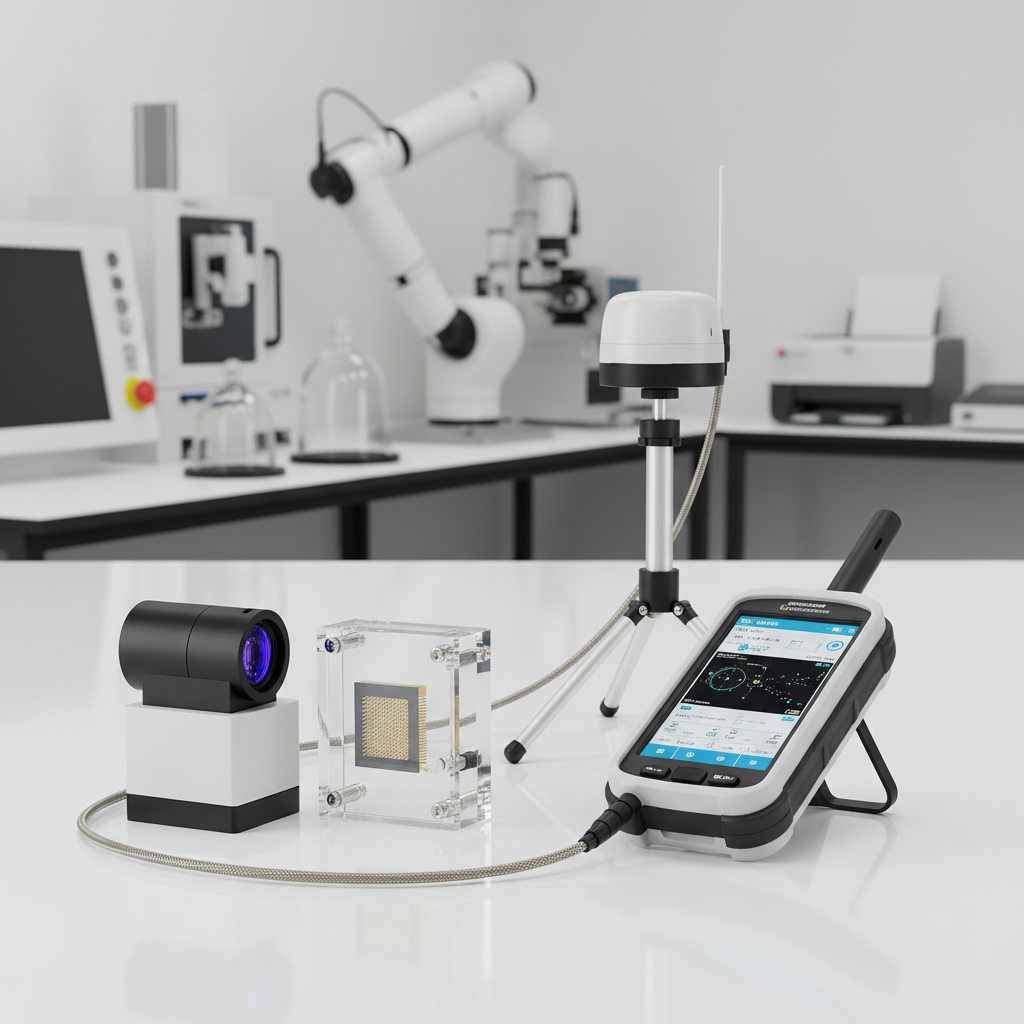
Global Relevance of GNSS RTK Receiver Service
The global shift toward "Industry 4.0" has placed an immense premium on spatial intelligence. According to recent ISO standards for geospatial information, the ability to achieve real-time corrections is paramount for the safety of autonomous machinery. A professional gnss rtk receiver service is now a global necessity, enabling sectors from mining in Australia to precision farming in the American Midwest to operate with millimeter-level confidence.
Without these correction services, standard GNSS positions can drift by several meters due to atmospheric interference and satellite clock errors. This discrepancy is unacceptable in high-stakes environments like urban excavation or UAV-based mapping, where a small error can lead to catastrophic infrastructure damage or significant financial loss.
Defining the Mechanics of GNSS RTK Receiver Service
At its core, a gnss rtk receiver service is a positioning technique that uses a fixed base station to provide real-time corrections to a mobile rover. Unlike standard GPS, which relies solely on the satellite-to-receiver path, RTK calculates the difference between the known position of the base station and the satellite signals, transmitting this "correction" to the rover to eliminate common atmospheric errors.
This synergy between the base and rover is what transforms a general location estimate into a precise coordinate. In the context of the C5 or N1 GNSS Systems, this service ensures that the receiver can lock onto multiple constellations (GPS, GLONASS, Galileo, BeiDou) simultaneously, providing a redundant and fail-safe positioning stream.
From a humanitarian perspective, this precision is vital for rapid disaster response. When mapping flooded zones or collapsed urban centers, a reliable gnss rtk receiver service allows relief agencies to create highly accurate 3D models of the terrain, directing resources to the exact square meter where they are most needed.
Core Components of a High-Precision GNSS RTK Receiver Service
The foundation of any effective gnss rtk receiver service begins with Signal Stability. High-grade antennas and receivers must be capable of filtering out multipath interference—signals that bounce off buildings or trees—to ensure that the data being processed is clean and reliable, regardless of the surrounding terrain.
Scalability and Integration are equally critical. A professional gnss rtk receiver service should seamlessly integrate with various hardware, from Handheld GPS units to complex Machine Control Systems. This allows a company to start with a few units and scale their entire fleet to a unified precision network without needing to overhaul their software infrastructure.
Finally, Cost Efficiency through Automation defines the modern approach. By utilizing NTRIP (Networked Transport of RTK via Internet Protocol), users can access a gnss rtk receiver service via a cloud-based network of base stations, removing the need for the user to set up and maintain their own physical base station on every single job site.
Global Applications and Industry Use Cases
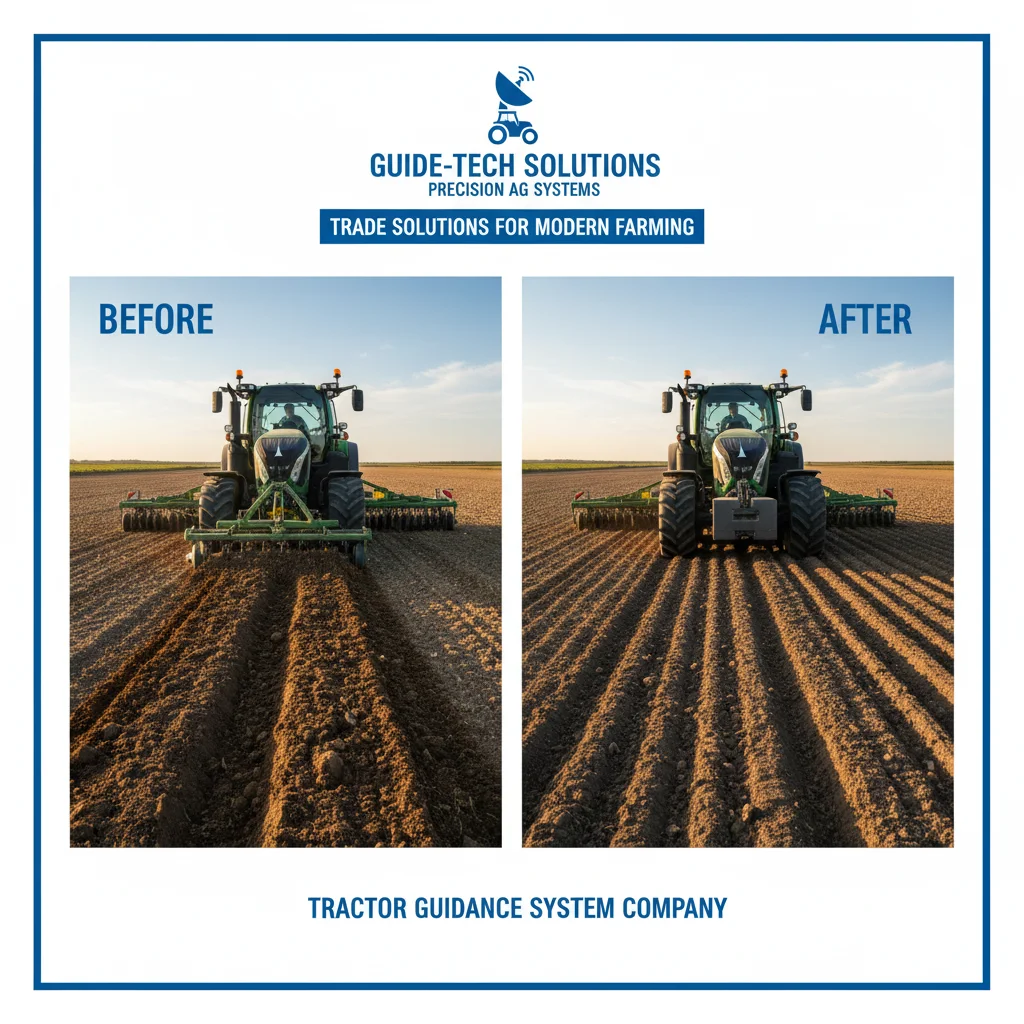
In the agricultural sector, the gnss rtk receiver service is the backbone of "Precision Ag." By integrating with Guidance & Steering Platforms, tractors can follow paths with centimeter accuracy, preventing overlap during planting and spraying. This not only saves thousands of dollars in chemicals and seeds but also protects the soil from unnecessary compaction, promoting long-term land health.
In the construction and mining industries, particularly with Excavators and Machine Control Systems, RTK services allow operators to dig to exact design depths without manual staking. In remote industrial zones, such as open-pit mines in South America, this automation reduces the risk to human workers and accelerates the project timeline by eliminating the need for constant manual surveys.
Comparative Performance of GNSS RTK Receiver Service Methods
Long-Term Value and Operational Advantages
The tangible benefits of implementing a high-quality gnss rtk receiver service extend far beyond simple coordinates. From a logical perspective, the reduction in rework is the most significant cost-saver. In large-scale grading projects, being off by just five centimeters can mean moving hundreds of extra cubic meters of earth; RTK precision eliminates this waste entirely.
Beyond the numbers, there is an emotional and professional value: Trust. When a site manager knows their Mobile Mapping Systems are backed by a certified gnss rtk receiver service, the stress of potential errors vanishes. This reliability fosters a culture of innovation, where teams feel confident deploying fully autonomous systems, knowing that the safety and dignity of their workforce are protected by unfailing technology.
Future Trends in RTK Positioning Technology
The next frontier for the gnss rtk receiver service is the convergence of satellite positioning with 5G connectivity. This will allow for "Ultra-Low Latency RTK," where correction data is transmitted almost instantaneously, enabling high-speed autonomous vehicles to navigate complex urban environments with millisecond response times.
Digital transformation is also leading toward "Virtual Reference Stations" (VRS). Instead of physical base stations, the gnss rtk receiver service will increasingly rely on sophisticated software models of the atmosphere and satellite orbits, allowing for seamless, high-precision coverage across entire continents without the need for local hardware.
Furthermore, the push for green energy is integrating RTK into the maintenance of solar and wind farms. Precision positioning allows for the automated inspection of thousands of panels or turbine blades via UAV Platforms, ensuring that every component is monitored with pinpoint accuracy, thereby increasing the overall efficiency of renewable energy grids.
Overcoming Common Challenges in RTK Deployment
One of the most persistent challenges in providing a gnss rtk receiver service is "Signal Shadowing" in deep canyons or dense urban forests. When the line-of-sight to the satellite is blocked, the RTK lock can be lost. Expert solutions now involve "Sensor Fusion," combining RTK with Inertial Measurement Units (IMUs) to maintain precision during brief signal outages.
Another common hurdle is the complexity of initial setup for non-technical users. To solve this, the industry is moving toward "Plug-and-Play" GNSS Sensors and Smart Antennas that auto-configure their connection to the nearest correction network, making professional-grade precision accessible to small business owners without requiring a degree in geodesy.
Lastly, data security in RTK streams is becoming a priority. As we move toward autonomous infrastructure, ensuring that the gnss rtk receiver service is encrypted and protected from "spoofing" (fake signals) is essential. Implementing multi-constellation verification and encrypted NTRIP streams is the current gold standard for securing spatial data.
Technical Analysis of RTK Service Implementation Dimensions
| Service Method |
Setup Complexity |
Accuracy Level |
Operating Cost |
| Single Base RTK |
High |
1-3 cm |
Medium (Hardware) |
| NTRIP Network |
Low |
2-5 cm |
Subscription Based |
| PPP-RTK |
Medium |
5-10 cm |
Low |
| Multi-Base Network |
Very High |
1-2 cm |
High (Maintenance) |
| Hybrid IMU-RTK |
Medium |
2-4 cm |
Medium |
| Standard DGPS |
Low |
30-100 cm |
Very Low |
FAQS
Standard GNSS typically provides accuracy within a few meters, which is sufficient for general navigation. A gnss rtk receiver service utilizes a base station or a network of stations to provide real-time corrections to the receiver, reducing the error margin to a few centimeters. This is essential for industrial tasks where precision is non-negotiable, such as autonomous farming or precise construction grading.
Not necessarily. While you can set up your own local base station for maximum control and reliability in remote areas, many users now opt for NTRIP services. NTRIP allows you to connect to a pre-existing network of base stations via the internet, significantly reducing hardware costs and setup time while still providing centimeter-level precision.
Signal loss, often caused by "urban canyons," is handled through a combination of multi-constellation support (using GPS, GLONASS, BeiDou, and Galileo) and sensor fusion. By pairing the RTK receiver with an Inertial Measurement Unit (IMU), the system can "dead reckon" the position for short periods, maintaining a smooth trajectory until the satellite lock is re-established.
The most significant beneficiaries include precision agriculture (for auto-steering and variable rate application), civil engineering (for machine control and site grading), UAV surveying (for high-accuracy photogrammetry), and autonomous vehicle development. Any industry that requires precise spatial data to automate workflows or ensure safety benefits from this service.
No, the receiver must be "RTK-enabled," meaning it has the processing power and hardware to handle the carrier-phase measurements required for RTK corrections. Professional systems like the N10 or E93 GNSS Systems are specifically designed for this, whereas consumer-grade GPS chips found in smartphones are not capable of processing RTK correction streams.
The time to reach a "Fixed" solution (the highest level of precision) varies. In open-sky conditions, it usually takes a few seconds to a minute. However, this can be influenced by the quality of the gnss rtk receiver service, the number of satellites visible, and the distance from the base station. Advanced receivers can significantly reduce this "Time to First Fix" (TTFF) through better algorithms.
Conclusion
The implementation of a professional gnss rtk receiver service is a transformative step for any organization relying on spatial data. By eliminating the inherent errors of standard satellite positioning, RTK technology enables a level of precision that drives operational efficiency, reduces waste, and ensures the highest standards of safety across agriculture, construction, and mapping. From the ability to automate complex machinery to the creation of hyper-accurate 3D maps, the value of this service is measured not just in centimeters, but in the significant competitive advantage it provides.
Looking forward, as we embrace the era of autonomous systems and 5G integration, the role of high-precision positioning will only grow. We recommend that businesses evaluate their current accuracy needs and transition toward integrated RTK solutions to future-proof their operations. For those seeking to elevate their precision and efficiency, exploring state-of-the-art GNSS hardware and support services is the best path forward. Visit our website for more information: www.nctnav.com