


Shanghai Newdi Navigation Technology Co.,Ltd

Precision GNSS RTK Receiver Solutions for Palestine

Empowering Palestinian infrastructure and agriculture with world-class geospatial measurement and automated guidance technology.

Precision GNSS RTK Receiver Solutions for Palestine

Integrating high-precision surveying equipment to optimize land management and construction accuracy across the diverse terrains of Palestine.

The Current Landscape of Geomatics in Palestine

Analyzing the intersection of traditional surveying and modern digital transformation.

In Palestine, the surveying industry faces unique challenges due to fragmented land ownership and complex topographical variations. The demand for reliable surveying equipment has surged as the region seeks to modernize its urban planning and secure land boundaries with higher legal certainty.

Agricultural sectors in the West Bank and Gaza are increasingly looking toward precision farming to combat water scarcity and soil degradation. The adoption of auto steer tractor systems is becoming a strategic priority to maximize crop yields and reduce resource waste in narrow, terraced landscapes.

Despite economic constraints, there is a clear transition from basic optical tools to digital systems. The integration of gps diferencial technology is now essential for large-scale infrastructure projects, ensuring that road networks and utility lines are laid with millimeter-level precision.
Evolution and Technical Trajectory of Measurement Tools

From manual theodolites to real-time satellite corrections.

Market Development History

Prior to 2010, the Palestinian market relied heavily on mechanical instruments. The primary tool for land boundary definition was the basic total station, which provided high accuracy but required significant manual labor and clear lines of sight.

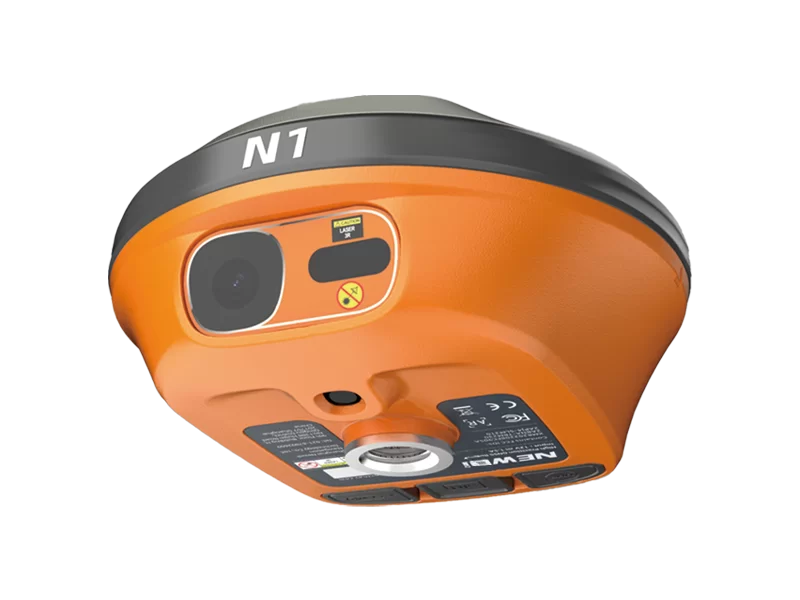
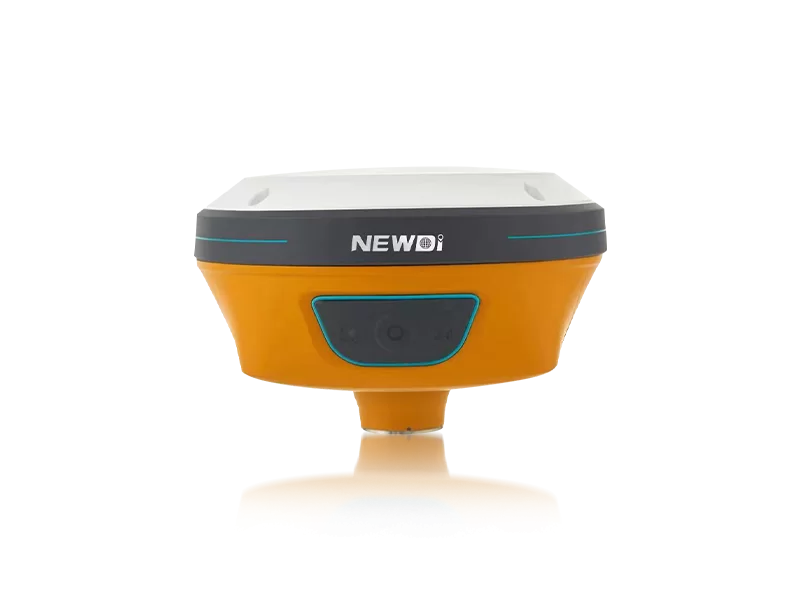
Between 2010 and 2020, the shift toward GNSS technology began. The introduction of the gnss rtk receiver revolutionized the field, allowing surveyors to move away from static observations to real-time kinematic positioning, drastically reducing project timelines.

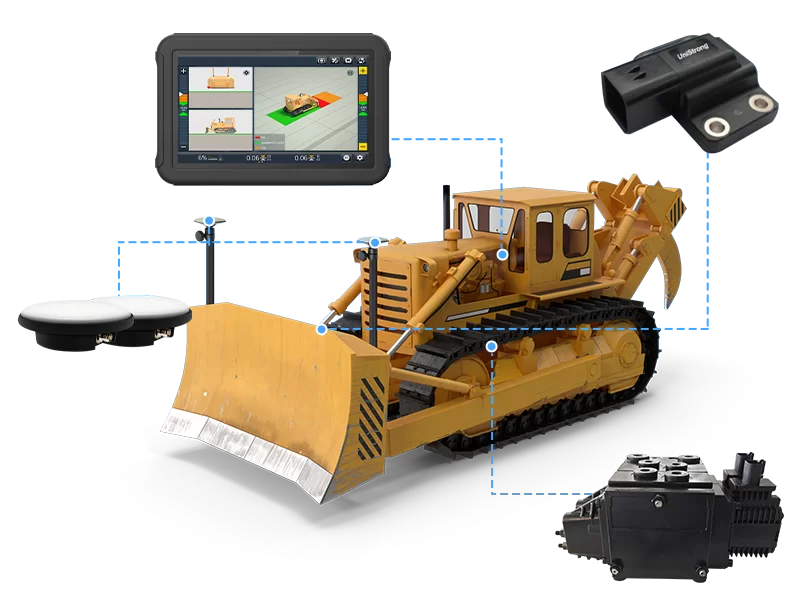
In the current era, the convergence of IoT and satellite positioning has led to the rise of autonomous machinery. The shift from simple GPS mapping to active machine control, such as the auto steer tractor, marks the beginning of the "Smart Farming" era in the region.

Future Development Trends

Multi-Constellation Synergy

Future systems will move beyond GPS, integrating Beidou, GLONASS, and Galileo to ensure signal stability in the densely built urban areas of Ramallah and Gaza.

AI-Driven Terrain Analysis

The integration of AI with surveying equipment will allow for automated feature recognition and 3D modeling in real-time.

Autonomous Infrastructure Maintenance

We expect a transition toward fully autonomous grading and paving systems using enhanced gps diferencial corrections for public works.

Industry Outlook & Future Prospects

Strategizing for a digital-first geospatial future in Palestine.

Hyper-Local Correction Networks
Deployment of localized CORS networks to provide centimeter-level accuracy without manual base stations.
Agricultural Automation
Integration of autonomous steering in olive groves to optimize harvest routes and planting.
Cloud-Based GIS Integration
Seamless syncing of field data from RTK receivers to cloud-based municipal planning offices.
Hybrid Surveying Workflows
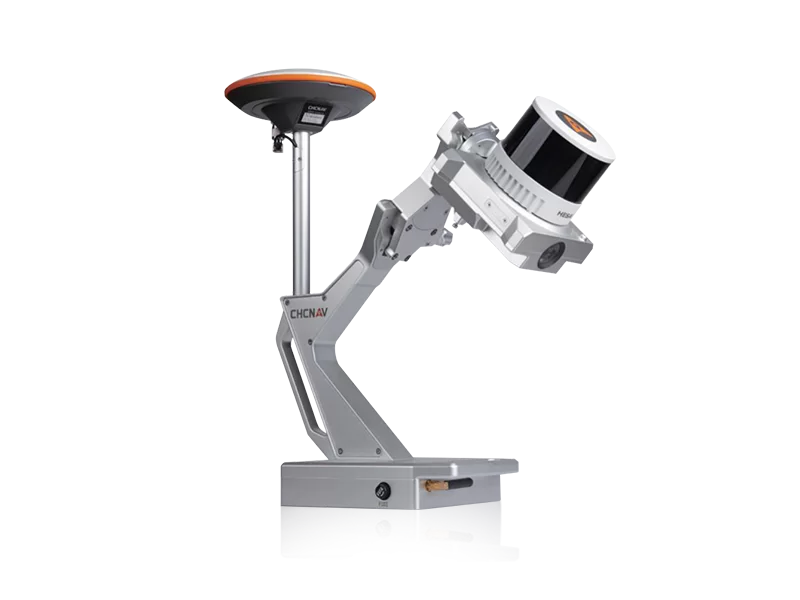
Combining LiDAR and GNSS to create high-fidelity digital twins of historical Palestinian sites.

Industry Outlook

Driven by Google Search trends for "precision agriculture" and "smart city infrastructure," the Palestinian market is expected to shift toward a "Software-as-a-Service" (SaaS) model for positioning corrections. This will lower the barrier to entry for small-scale farmers adopting automated tools.

The convergence of high-frequency GNSS updates and robust hardware will enable the region to overcome the instability of legacy mapping, fostering a new era of sustainable urban expansion and efficient resource management.

Localized Application Scenarios in Palestine

Practical deployment of high-precision measurement tools in real-world local contexts.

01. Olive Grove Precision Mapping

Using gnss rtk receiver technology to map centuries-old olive groves, ensuring optimal irrigation layout and precise tree inventory for agricultural subsidies.

02. Urban Redevelopment in Ramallah

Deploying a high-precision total station to execute complex building footprints in dense urban corridors where satellite signals may be obstructed by high-rise structures.

03. Agricultural Land Leveling

Implementing auto steer tractor systems for land grading, reducing fuel consumption and ensuring perfect water runoff patterns in arid valley regions.

04. Boundary Dispute Resolution

Utilizing gps diferencial systems to provide legally defensible boundary demarcations, reducing conflicts through undisputed coordinate data.

05. Road Network Expansion

Combining various surveying equipment to plan new transportation links through mountainous terrain, ensuring slope stability and optimal alignment.

Brand Story

Global Development Journey of Shanghai NCT Navigation Technology Co., Ltd.

Founding Vision

Established with the mission to democratize high-precision positioning, focusing on solving the gap between industrial accuracy and field usability.

Technical Breakthrough

Developed proprietary RTK algorithms that significantly reduced signal acquisition time in challenging environments.

Global Expansion

Extended operations to Asia and the Middle East, adapting hardware to withstand extreme temperature and dust conditions.

Eco-System Integration

Launched a full suite of autonomous guidance tools, bridging the gap between surveying and active machine control.

Future Commitment

Dedicated to providing the Palestinian market with affordable, high-reliability tools to empower local infrastructure and food security.

Comprehensive Geospatial Suite for Palestine

From high-precision handhelds to autonomous machine guidance.

Common Questions in Palestinian Surveying

Expert answers to the most frequent technical queries in the region.

How does a GNSS RTK receiver maintain accuracy in hilly Palestinian terrain?

By utilizing a base station or a CORS network, the receiver receives real-time corrections to eliminate atmospheric errors, ensuring centimeter-level precision even in complex topographies.

Is a total station still necessary if I have GPS differential equipment?

Yes, for urban "canyons" or heavily forested areas where satellite signals are blocked, a total station provides the essential line-of-sight accuracy that GNSS cannot.

Can an auto steer tractor be installed on older machinery models?

Our systems are designed for universal compatibility, using electric steering motors and GNSS receivers that can be retrofitted to most tractor brands.

What is the best surveying equipment for land boundary disputes?

A combination of a high-end RTK receiver for coordinates and a total station for precise physical marking is recommended for legal boundary definition.

How do I ensure signal stability for my GNSS RTK receiver in rural Gaza?

Using multi-band, multi-constellation receivers ensures you can lock onto satellites from different systems, reducing the risk of signal loss.

What are the benefits of GPS differential systems over standard GPS?

Standard GPS is accurate to meters; differential systems use a reference station to correct errors, bringing accuracy down to the centimeter range.

Get Expert Guidance Today

Ready to modernize your measurement workflow? Our team is dedicated to supporting the engineering and agricultural growth of Palestine.

Contact Us Now