

Shanghai Newdi Navigation Technology Co.,Ltd

Precision gnss rtk receiver Solutions for Ecuador's Diverse Terrains

Empowering Ecuadorian infrastructure and agriculture with high-accuracy geospatial measurement and autonomous navigation technology.

Precision gnss rtk receiver Solutions for Ecuador's Diverse Terrains

Integrating world-class surveying equipment to optimize land management and construction accuracy across the Andean highlands and coastal plains of Ecuador.

The State of Geospatial Measurement in Ecuador

Analyzing the challenges of precision mapping in a geographically complex region.

Ecuador presents a unique challenge for surveying equipment due to its extreme altitudinal variations, ranging from the Galápagos coast to the high Andean peaks. The dense cloud cover in the cloud forests often interferes with traditional satellite signals, necessitating more robust signal processing.

In the agricultural sector, particularly in the banana and flower export hubs, there is a growing demand for gps diferencial systems to optimize land use. Traditional manual mapping is no longer sufficient for the precision required in modern sustainable farming practices.

Furthermore, urban expansion in cities like Quito and Guayaquil requires high-precision total station deployments to manage complex topography and ensure structural integrity in seismic-prone zones, driving the shift toward integrated digital workflows.
Evolution of Measurement Technology in Ecuador

From optical measurements to real-time kinematic satellite corrections.

Market Development History

Before 2010, the Ecuadorian market relied heavily on traditional optical tools and basic total station units. Surveying was a labor-intensive process requiring extensive manual calculations and physical markers across difficult terrain.

Between 2010 and 2020, the introduction of early GNSS technology allowed for faster boundary definition. However, the lack of a dense local CORS network meant that gps diferencial setups were often cumbersome, requiring site-specific base stations for every project.

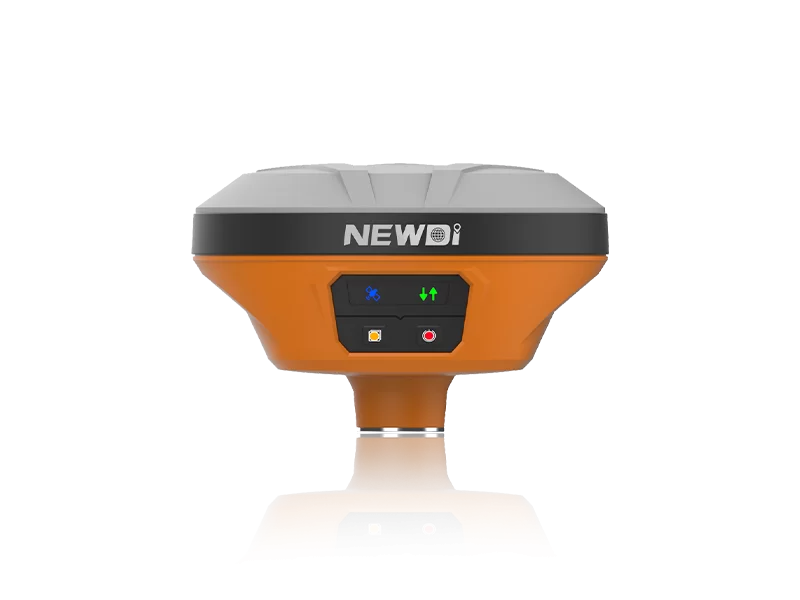
From 2020 to the present, the adoption of the gnss rtk receiver has revolutionized the industry, enabling centimeter-level accuracy in real-time. This has accelerated the deployment of smart farming and rapid infrastructure auditing across the country.

Future Development Trends

Integration of AI and Autonomous Farming

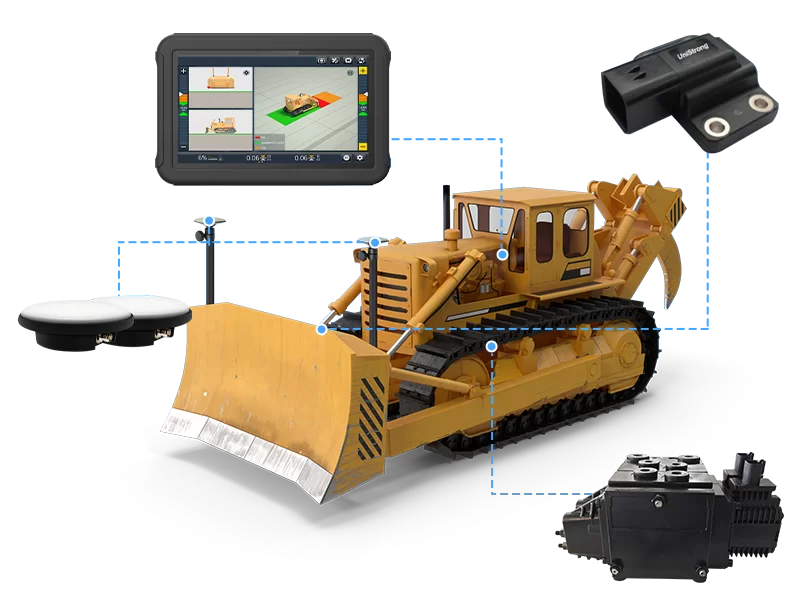
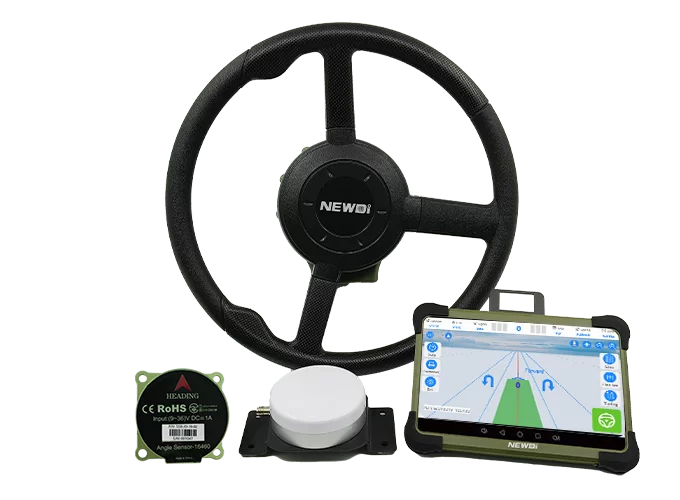
The shift toward the auto steer tractor is accelerating as Ecuadorian agribusinesses seek to reduce overlap and waste in fertilizer application through automated guidance.

Multi-Constellation Synergy

Future systems will rely on the simultaneous use of GPS, GLONASS, BeiDou, and Galileo to maintain signal lock in the deep valleys of the Andes, reducing "blind spots" for surveyors.

Cloud-Based Geospatial Ecosystems

Transitioning from local data storage to cloud-integrated GIS platforms will allow real-time collaboration between field engineers in Ecuador and project managers globally.

Future Trends and Strategic Outlook

Forecasting the technological trajectory of Ecuador's measurement industry.

Autonomous Agriculture Transition
Widespread adoption of auto steer tractor systems to maximize crop yield in the Coastal region.
RTK Network Expansion
Integration of NTRIP services to eliminate the need for local base stations across the Sierra region.
BIM-GIS Integration
Direct data streaming from field instruments to 3D building information models for urban development.
Environmental Monitoring
Utilizing precision sensors for glacial monitoring and landslide prediction in the Andean range.

Industry Outlook

The Ecuadorian measurement market is shifting from a "tool-based" approach to a "solution-based" approach. Google search trends indicate a significant increase in queries for "precision farming" and "digital topography" within the region, suggesting that end-users are now prioritizing operational efficiency over simple hardware ownership.

Over the next 3-5 years, we expect a convergence of GNSS technology and IoT, where every gnss rtk receiver acts as a data node in a larger national spatial network, enabling smarter urban planning and more resilient agricultural exports.

Local Application Scenarios in Ecuador

Real-world implementation of precision instruments in the Ecuadorian landscape.

01. Banana Plantation Optimization in Guayas

Deploying auto steer tractor systems to ensure precise row spacing and minimize soil compaction, directly increasing the yield per hectare for export-grade bananas.

02. Andean Highway Expansion Projects

Utilizing a combination of total station and RTK GNSS to map steep slopes and ensure precise grading for new road infrastructure connecting the highlands to the coast.

03. Cadastral Mapping in Rural Communities

Using gps diferencial technology to resolve land ownership disputes by creating legally binding, centimeter-accurate boundary maps.

04. Urban Drainage Systems in Quito

Implementation of high-precision surveying equipment to design gravity-fed drainage systems that prevent flooding in the city's complex valley topography.

05. Flower Farm Irrigation Planning

Applying gnss rtk receiver data to create precise digital elevation models (DEM) for the efficient layout of automated drip irrigation systems in rose plantations.

Brand Story

Global Development History of Shanghai Newland Navigation Technology Co., Ltd.

Founding Vision

Established with the mission to democratize high-precision positioning, we focused on breaking the barriers between complex satellite data and practical field application.

Technological Breakthrough

Developed proprietary RTK algorithms that significantly reduced convergence time, allowing surveyors to achieve fixes in challenging environments faster than ever.

Agricultural Pivot

Recognizing the global need for food security, we expanded into the autonomous machinery sector, creating seamless integration for tractor guidance systems.

Global Expansion

Established strategic partnerships across South America, tailoring our hardware to withstand the diverse climates of regions like Ecuador.

Future Commitment

Dedicated to the "Precision for All" initiative, continuing to innovate in multi-sensor fusion to solve the most difficult measurement challenges on earth.

Comprehensive Precision Portfolio for Ecuador

A complete suite of tools designed for the unique demands of the Ecuadorian market.

Ecuador Surveying & GNSS FAQ

Expert answers to common technical questions from our local users.

How does a GNSS RTK receiver perform in the Andean mountains?

Our receivers use multi-constellation tracking to mitigate signal blockage caused by steep canyon walls, ensuring stable centimeter-level accuracy even in rugged Andean terrains.

Can an auto steer tractor be installed on older machinery in Ecuador?

Yes, our universal steering kits are designed to be retrofitted onto most tractor brands common in Ecuador, providing modern precision to existing fleets.

What is the difference between a total station and RTK GNSS for urban Quito?

A total station is preferred for high-precision work in "urban canyons" where satellite signals are blocked, while RTK GNSS is ideal for rapid mapping of open areas.

How do I set up a gps diferencial base station for a remote site?

You can deploy a standalone base station with a long-range radio link or utilize a network RTK service via a SIM card for remote locations across the country.

Which surveying equipment is best for coastal soil mapping in Guayas?

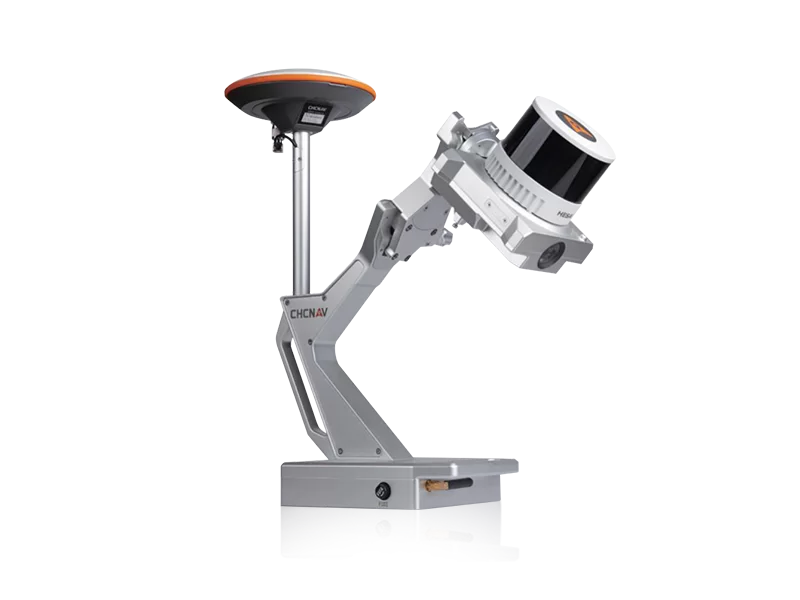
We recommend a lightweight GNSS RTK rover combined with a precision pole for rapid data collection in the soft soils of the coastal plains.

Are these instruments calibrated for the Ecuadorian coordinate system?

Yes, our software supports customizable coordinate systems and datums, allowing seamless integration with official Ecuadorian geospatial standards.

Ready to Upgrade Your Precision?

Our experts are ready to help you implement the best geospatial solutions in Ecuador.

Contact Us Now