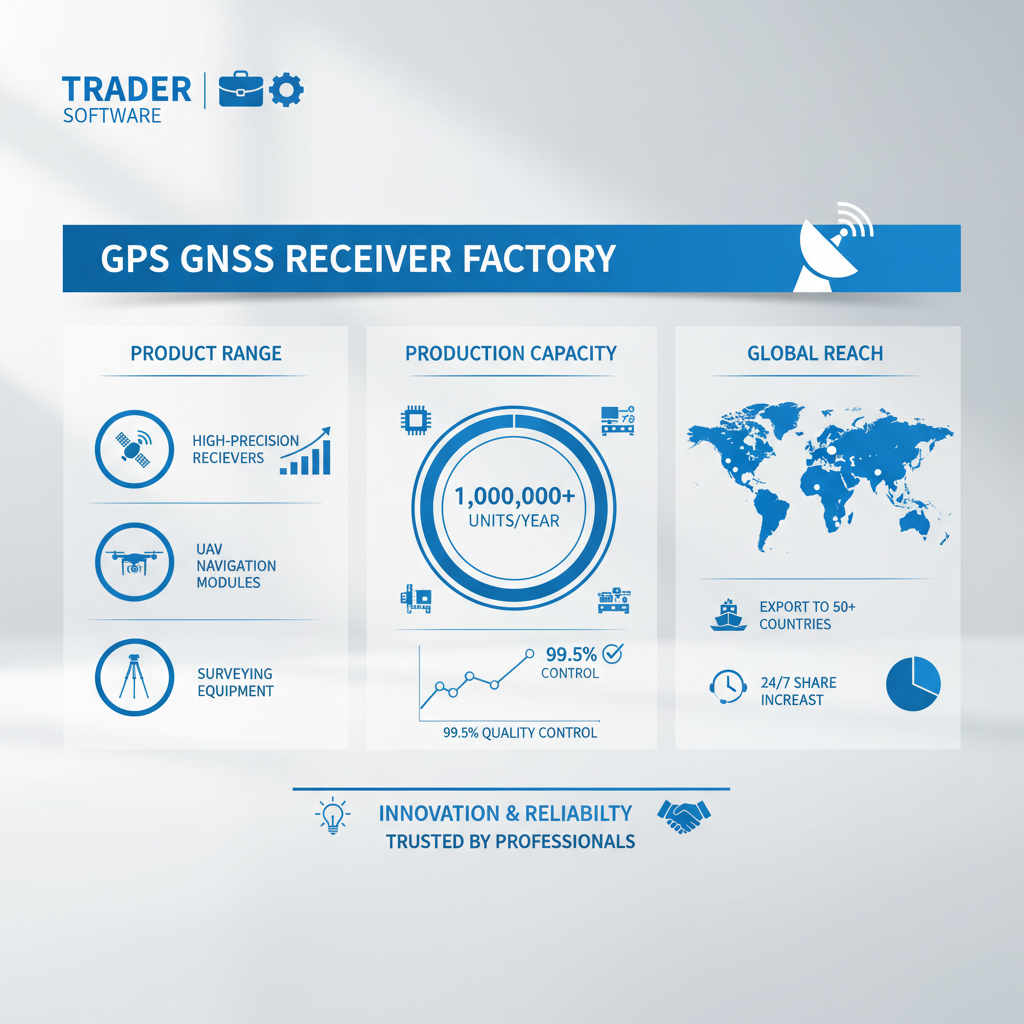
The precision of modern spatial positioning relies heavily on the technical capabilities of a professional gps gnss receiver factory. In an era where autonomous farming, precise mapping, and industrial automation are becoming standard, the ability to manufacture high-grade receivers that can synthesize signals from multiple satellite constellations is no longer a luxury, but a necessity for operational efficiency.
Understanding the inner workings of a gps gnss receiver factory allows businesses to bridge the gap between raw satellite data and actionable on-ground precision. From the selection of high-stability oscillators to the implementation of advanced noise-reduction algorithms, the manufacturing process determines whether a system achieves centimeter-level accuracy or suffers from debilitating signal drift in challenging environments.
By exploring the synergy between hardware engineering and software optimization, this guide provides a comprehensive overview of how a gps gnss receiver factory supports global infrastructure. Whether you are integrating GNSS sensors into UAV platforms or deploying machine control solutions for heavy equipment, the origin and quality of the receiver are the primary determinants of long-term system reliability.
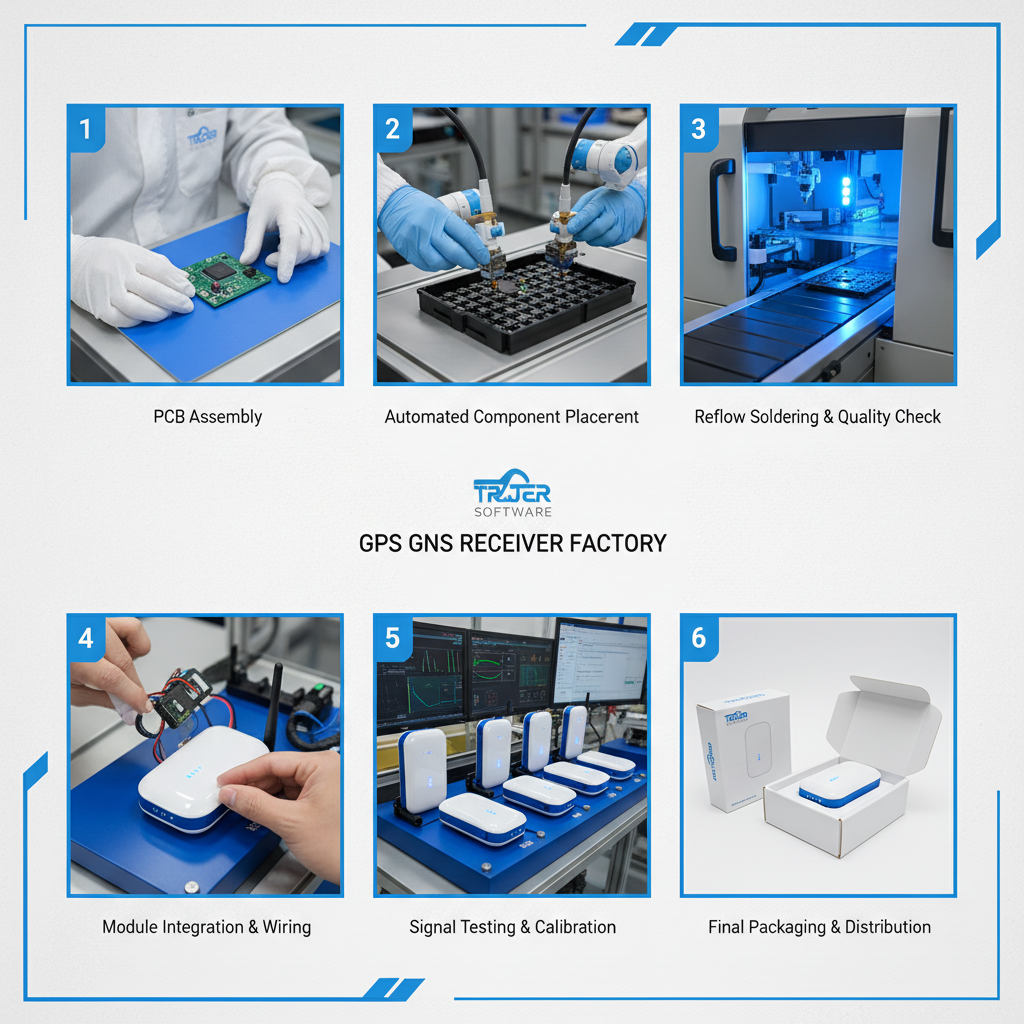
Global Relevance of the GPS GNSS Receiver Factory
On a global scale, the output of a specialized gps gnss receiver factory is the invisible backbone of the modern logistics and agricultural revolution. With the increasing demand for "Smart Farming" and automated infrastructure, the reliance on Global Navigation Satellite Systems (GNSS) has surged. According to industry trends aligned with ISO standards for geospatial information, the transition from simple GPS to multi-constellation GNSS (integrating GLONASS, Galileo, and BeiDou) has reduced positioning errors from meters to centimeters, enabling fully autonomous machine control.
However, the industry faces a critical challenge: signal interference and "urban canyons" often render standard receivers useless. This is where a high-end gps gnss receiver factory differentiates itself by implementing advanced multi-frequency processing and RTK (Real-Time Kinematic) capabilities. By solving the problem of atmospheric delay and multipath interference, these factories enable the deployment of high-precision data collectors and mobile mapping systems in the most demanding environments on earth.
Defining the Modern GPS GNSS Receiver Factory
In simple terms, a gps gnss receiver factory is a high-tech manufacturing facility dedicated to producing the hardware and firmware required to capture, process, and translate satellite signals into precise geographic coordinates. Unlike consumer-grade electronics plants, these factories focus on extreme reliability, electromagnetic compatibility (EMC), and the integration of sophisticated antenna arrays that can withstand harsh outdoor industrial conditions.
The connection to modern humanitarian and industrial needs is profound. For instance, in precision agriculture, a receiver from a certified gps gnss receiver factory allows tractors to plant seeds with millimetric precision, drastically reducing waste and increasing food security. Similarly, in disaster relief, high-precision handheld GPS units are essential for mapping affected areas where traditional infrastructure has collapsed, ensuring that aid reaches the correct coordinates without delay.
Furthermore, these factories are evolving into integrated solution centers. They no longer just sell a "box" but provide the ecosystem—including smart antennas, guidance platforms, and the N1 or M2 GNSS systems—that allows a client to move from a conceptual need for location data to a fully operational automated fleet.
Core Components of High-Precision Manufacturing
The first pillar of a successful gps gnss receiver factory is Signal Integrity and Noise Reduction. This involves the use of high-grade SAW (Surface Acoustic Wave) filters and low-noise amplifiers (LNA) that ensure the receiver can pick up faint satellite signals while ignoring the electronic noise generated by the machine it is mounted on.
Secondly, Scalability and Modular Design are critical. A top-tier gps gnss receiver factory designs its products—such as the E93 or N10 systems—to be modular. This allows users to upgrade from a basic positioning system to a full Machine Control Solution without replacing the entire hardware stack, ensuring a longer lifecycle and better ROI for the end-user.
Finally, Environmental Durability cannot be overlooked. Receivers must operate in extreme temperatures, from Siberian winters to Saharan heat, while resisting vibration and moisture. The factory achieves this through rigorous IP67/IP68 certification testing and the use of industrial-grade potting compounds to protect the delicate circuitry from the elements.
Operational Performance Metrics in GNSS Production
Measuring the success of a gps gnss receiver factory requires a look at technical KPIs such as Time to First Fix (TTFF), tracking stability in high-dynamic scenarios, and the accuracy of the RTK convergence. When comparing different manufacturing methodologies, the ability to maintain a "Fixed" solution under canopy or near buildings is the ultimate test of a factory's engineering prowess.
The following data reflects the comparative performance ratings of different receiver tiers produced within a professional gps gnss receiver factory, highlighting the trade-off between cost-efficiency and absolute precision.
Comparative Performance of GNSS Receiver Series
Global Applications and Industrial Use Cases
The practical application of technology from a gps gnss receiver factory spans across diverse sectors. In the agricultural heartlands of the US Midwest and Brazil, GNSS-guided steering platforms reduce overlap during planting, saving thousands of dollars in fuel and fertilizer. Similarly, in the construction sites of Dubai or Singapore, machine control solutions integrated with N702 sensors ensure that grading and excavation are performed to exact digital blueprints without manual staking.
Beyond commercial gain, these systems are vital in remote industrial zones for pipeline monitoring and environmental conservation. Mobile mapping systems, powered by high-end receivers, allow organizations to create high-resolution 3D twins of entire cities, facilitating better urban planning and emergency response strategies. The ability of a gps gnss receiver factory to customize firmware for these specific niches is what drives the adoption of the technology.
Long-Term Value and Strategic Advantages
Investing in hardware from a reputable gps gnss receiver factory provides more than just a coordinate; it provides "trust" in the data. For a fleet manager, this means the difference between a vehicle arriving at the correct loading dock or blocking a highway. The logical advantage is found in the reduction of operational downtime—high-quality receivers rarely lose lock, meaning automated systems don't have to stop and wait for signal re-acquisition.
From an emotional and social perspective, this precision translates to safety. Whether it is a UAV platform transporting medical supplies in a remote village or an autonomous tractor avoiding a hidden obstacle in a field, the reliability of the GNSS receiver is a safeguard for human life. When a factory prioritizes E-E-A-T (Experience, Expertise, Authoritativeness, and Trustworthiness) in its engineering, the end-user gains peace of mind.
Furthermore, the sustainability impact is significant. By optimizing paths and reducing idle time through precise guidance, companies lower their carbon footprint. The long-term value of a professional gps gnss receiver factory is therefore measured not just in accuracy, but in the overarching efficiency and safety of the global supply chain.
Future Innovations in GNSS Receiver Engineering
The future of the gps gnss receiver factory lies in the integration of "Sensor Fusion." We are moving beyond relying solely on satellites; the next generation of receivers will combine GNSS data with Inertial Measurement Units (IMU) and LiDAR in real-time. This ensures that even when a vehicle enters a tunnel or a dense forest, the positioning remains seamless and uninterrupted.
Digital transformation is also driving the shift toward "Software Defined Receivers" (SDR). Factories are now developing hardware that can be updated via the cloud to support new satellite signals or correction algorithms without requiring a physical hardware swap. This shift toward a service-oriented model ensures that the equipment remains state-of-the-art for a decade rather than a few years.
Additionally, the push for green energy is influencing the design phase. New power-management circuits are being integrated into the gps gnss receiver factory's workflow to minimize the energy draw of handheld units and UAV sensors, extending battery life and reducing the environmental impact of large-scale deployments.
Analysis of Technical Evolution in GNSS Receiver Manufacturing
| Evolution Stage |
Technical Focus |
Precision Level |
Primary Market |
| Legacy Era |
Single-constellation GPS |
3-10 Meters |
Basic Navigation |
| Multi-GNSS Era |
GLONASS/Galileo Integration |
1-3 Meters |
General Logistics |
| RTK Revolution |
Real-Time Kinematic Correction |
1-3 Centimeters |
Precision Agriculture |
| Sensor Fusion |
GNSS + IMU Integration |
Sub-Centimeter |
Autonomous Vehicles |
| AI-Enhanced |
Predictive Signal Filtering |
Dynamic Precision |
Smart Cities/UAVs |
| SDR Era |
Cloud-Updateable Firmware |
Adaptive |
Enterprise Ecosystems |
FAQS
A standard factory may produce basic receivers for consumer apps, but a professional gps gnss receiver factory focuses on multi-constellation support (GPS, GLONASS, Galileo, BeiDou) and RTK capabilities. This allows for centimeter-level accuracy and industrial-grade durability, which are essential for machine control and professional surveying, whereas consumer units are typically accurate only to several meters.
Factories achieve this by implementing advanced multi-frequency receivers and sophisticated algorithms to filter out multipath interference (signals bouncing off buildings). By utilizing diverse satellite constellations and integrating IMU sensors, the receiver can maintain a stable position even when the direct line-of-sight to the sky is partially obstructed.
Yes, a specialized gps gnss receiver factory typically designs its products to be compatible with various Guidance & Steering Platforms. Through standard communication protocols like NMEA, their receivers can be integrated into most modern tractor and harvester systems to enable automated steering and precision planting.
Due to the use of industrial-grade components and IP67/68 weatherproofing, receivers from a professional gps gnss receiver factory are built to last 5-10 years in the field. Furthermore, the move toward Software Defined Receivers (SDR) allows for firmware updates that keep the hardware relevant as satellite constellations evolve.
Not all, but most industrial lines include it. RTK (Real-Time Kinematic) requires a base station or a NTRIP network to provide corrections. A factory will offer different tiers: basic receivers for general tracking and RTK-enabled receivers for high-precision tasks like land surveying or autonomous machine control.
For UAVs, you need a receiver from a gps gnss receiver factory that specializes in "high-dynamic" tracking. This means the receiver can maintain a lock even during rapid accelerations and tilts. Look for lightweight, low-power units with high update rates (e.g., 10Hz to 20Hz) to ensure flight stability.
Conclusion
The role of a professional gps gnss receiver factory extends far beyond the simple assembly of electronic components; it is the creation of the foundational precision that drives modern automation. By integrating multi-constellation support, RTK accuracy, and industrial-grade durability, these factories enable the leap from estimated locations to absolute coordinates, powering everything from sustainable agriculture to safe autonomous transit.
As we look toward a future defined by sensor fusion and AI-driven positioning, the partnership between industrial end-users and high-quality manufacturers will be the deciding factor in operational success. To ensure your operations are built on a foundation of accuracy and reliability, we recommend investing in systems that prioritize engineering excellence and long-term scalability. Visit our website: www.nctnav.com