

Shanghai Newdi Navigation Technology Co.,Ltd

Precision GNSS RTK Receiver Solutions for Japan's Infrastructure

Empowering Japanese engineering and agriculture with centimeter-level accuracy and high-reliability positioning technology.

Precision GNSS RTK Receiver Solutions for Japan's Infrastructure

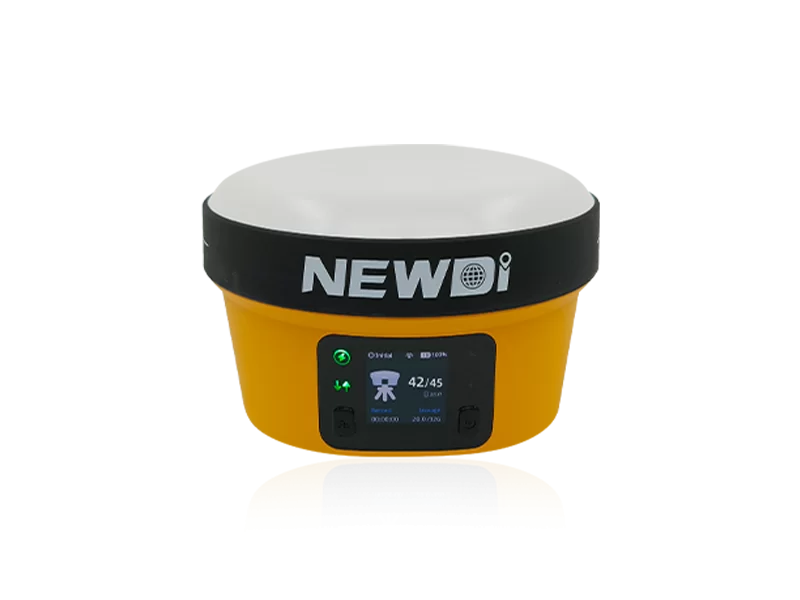
Integrating advanced gnss rtk receiver technology to meet the rigorous standards of Japanese surveying, construction, and smart farming sectors.

The State of Precision Measurement in Japan

Navigating the complexities of mountainous terrain and urban density with high-end surveying equipment.

Japan's unique geography, characterized by steep volcanic mountains and dense urban corridors like Tokyo and Osaka, creates significant challenges for signal propagation. Professionals rely on high-precision surveying equipment that can handle multi-path interference and maintain lock-on in challenging environments.

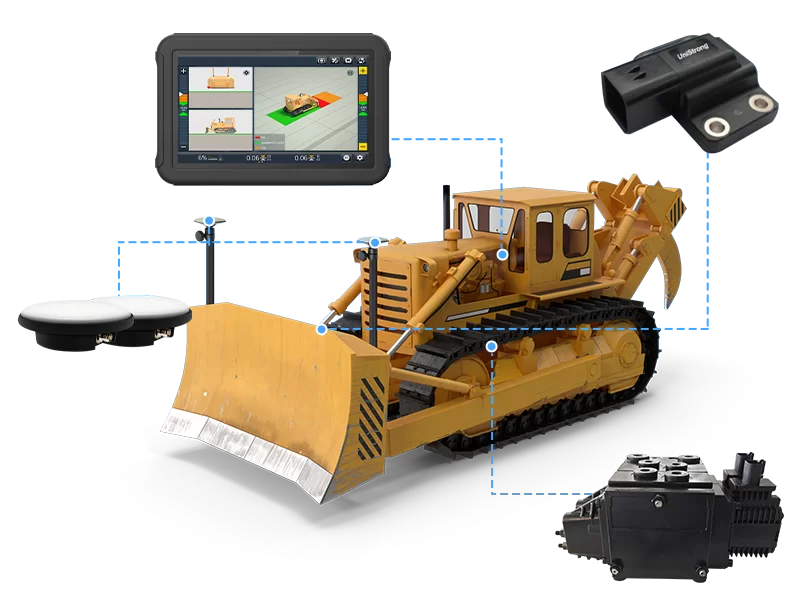
The agricultural sector in Japan is currently facing a severe labor shortage and an aging population. This has accelerated the adoption of autonomous machinery, specifically the auto steer tractor, to optimize land use in small-scale, fragmented paddy fields common in the rural prefectures.

Furthermore, the strict regulatory environment regarding land boundaries and seismic reinforcement requires the use of professional total station units combined with satellite data to ensure absolute structural integrity and legal compliance.
Evolution of Measurement Technology in Asia-Japan

From traditional optical methods to the era of real-time kinematic satellite positioning.

Market Development History

In the late 20th century, Japanese surveying relied heavily on traditional optical instruments. The precision of a total station was the gold standard for urban planning and civil engineering projects during the economic boom.

By the early 2010s, the transition toward GNSS began. The introduction of gps diferencial (DGPS) allowed for wider area coverage, reducing the time required for baseline measurements in remote mountainous regions.

From 2018 onwards, the shift toward RTK (Real-Time Kinematic) technology has dominated. The integration of multi-constellation support (GPS, GLONASS, Galileo, Beidou) has enabled centimeter-level accuracy in real-time, fundamentally changing how land is managed.

Future Development Trends

Integration of AI and Autonomous Control

We expect a deeper integration of AI with the auto steer tractor to allow for fully autonomous farm management without human intervention.

Ultra-Dense Reference Station Networks

The expansion of VRS (Virtual Reference Station) networks across Japan will eliminate the need for local base stations, enhancing the efficiency of RTK receivers.

Convergence of LiDAR and GNSS

Combining high-speed laser scanning with satellite positioning will allow for the creation of hyper-accurate 3D digital twins of Japanese cities for disaster prevention.

Future Outlook for Precision Instrumentation

Strategic technological trajectories for the next 3-5 years in the Japanese market.

5G-Enabled RTK Corrections
Leveraging Japan's 5G infrastructure to provide near-zero latency correction data for higher positioning stability.
Multi-Constellation Synergy
Advanced algorithms to utilize all available satellites, reducing TTFF in urban canyons.
Smart Farming Automation
Full-stack automation combining GNSS and IoT for precision planting and harvesting.
Cloud-Based Data Management
Real-time synchronization of field data to cloud platforms for instant project analysis.

Industry Outlook

Based on search trends in Japan, there is a growing demand for "Low-Cost High-Precision" solutions. The market is shifting from expensive, proprietary systems to open-protocol RTK systems that can be integrated into various hardware platforms.

The future will be defined by the convergence of spatial data and autonomous action. The ability to not only measure but to execute a task—such as automatic steering based on a precise map—will be the primary value driver.

Localized Application Scenarios in Japan

Real-world implementations of precision positioning across different Japanese industries.

01. Rice Paddy Autonomous Farming

Using auto steer tractor systems to navigate narrow rice fields in Niigata, reducing operator fatigue and increasing planting efficiency.

02. Urban Infrastructure Monitoring

Deploying a combination of total station and GNSS receivers in Tokyo to monitor tectonic shifts and building subsidence with millimeter accuracy.

03. Mountainous Forest Boundary Surveying

Utilizing high-sensitivity gnss rtk receiver units to map forest boundaries in the Japanese Alps where visibility is limited.

04. Disaster Recovery Mapping

Applying gps diferencial technology for rapid topographic mapping after seismic events to plan emergency relief roads.

05. Precision Civil Engineering

Implementing a full suite of surveying equipment for the construction of high-speed rail (Shinkansen) extensions, ensuring perfect alignment across long distances.

Brand Story

Global Development Journey of Shanghai NCT Navigation Technology Co., Ltd.

The Vision of Precision

Founded with the mission to democratize high-precision positioning, we started by solving the complexity of RTK integration for SMEs.

Technological Breakthroughs

We developed proprietary multi-constellation algorithms that significantly reduced signal noise in urban environments.

Expanding to Asia-Pacific

Recognizing the needs of the Japanese market, we localized our hardware to withstand extreme humidity and temperature fluctuations.

Agricultural Transformation

Our focus shifted toward smart farming, delivering robust steering solutions that integrated seamlessly with existing tractor brands.

Global Leadership

Today, we stand as a leader in providing end-to-end surveying and positioning solutions across the globe, focusing on sustainability and precision.

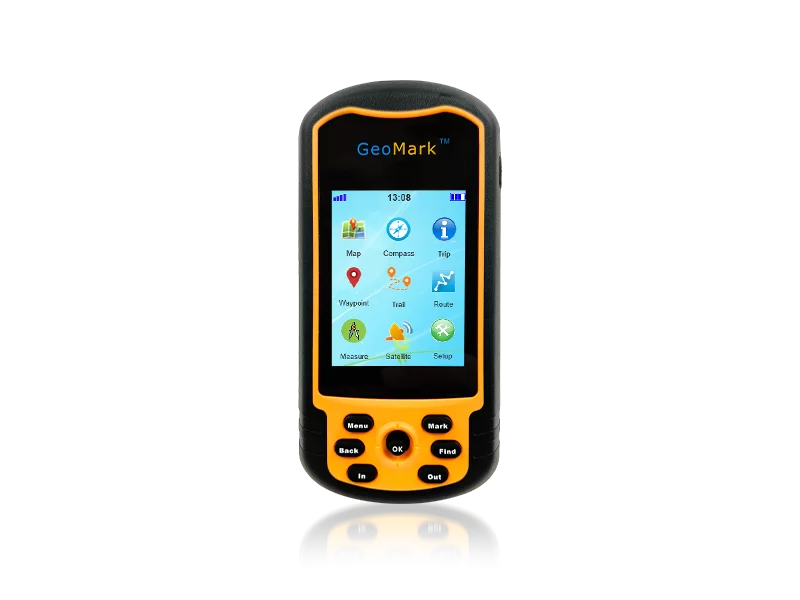
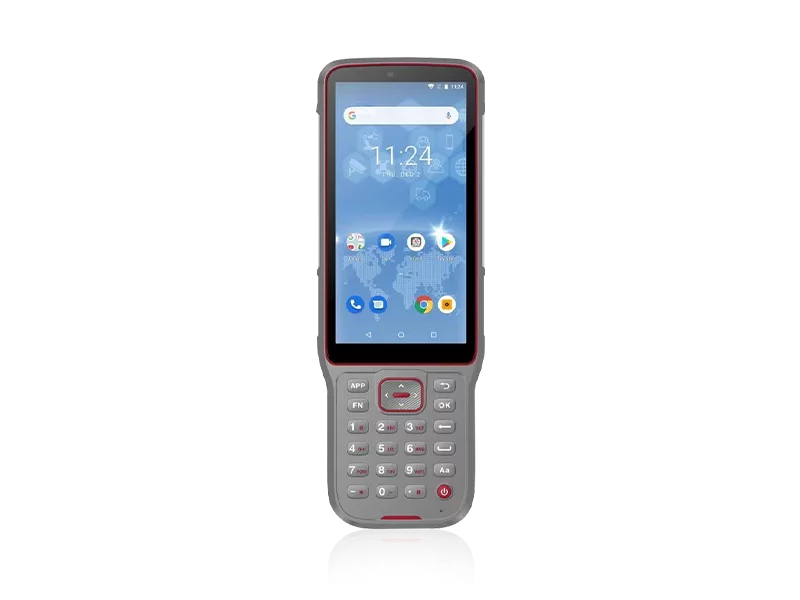
Complete Precision Product Portfolio for Japan

A comprehensive range of tools designed for the highest standards of Japanese measurement accuracy.

Common Questions for Japanese Operators

Technical guidance and industry-specific answers for the Japan region.

How does a gnss rtk receiver perform in dense Tokyo urban areas?

Our receivers use multi-constellation tracking and advanced filtering to mitigate multi-path errors caused by skyscrapers, ensuring stable centimeter-level precision.

Can the auto steer tractor be installed on older Japanese tractor models?

Yes, our kits are designed for universal compatibility, providing mechanical and electronic interfaces that fit most major tractor brands used in Japan.

What is the difference between a total station and RTK for boundary surveys?

A total station is superior for short-range, high-precision line-of-sight work, while RTK is faster for large-area mapping without needing clear visibility between points.

Is gps diferencial still relevant compared to modern RTK?

DGPS is still useful for sub-meter applications and areas with poor correction network coverage, but RTK is preferred for centimeter-level construction needs.

Where can I find the best surveying equipment for mountainous terrain?

For mountainous regions, we recommend equipment with high-gain antennas and multi-frequency support to maximize satellite visibility in deep valleys.

How do I maintain my GNSS hardware in humid Japanese summers?

Our hardware is IP67 rated for water and dust resistance. We recommend regular cleaning of connectors and storing equipment in a climate-controlled environment.

Ready to Upgrade Your Precision?

Contact our technical team today for a customized positioning strategy tailored for Japan.

Contact Us Now