
Shanghai Newdi Navigation Technology Co.,Ltd

Precision gnss rtk receiver Solutions for Ireland

Empowering Irish surveyors and farmers with high-accuracy positioning technology tailored for the Atlantic climate and rugged terrain.

Precision gnss rtk receiver Solutions for Ireland

Providing industry-leading measurement and guidance systems to optimize land management and infrastructure development across Ireland.

The Current State of Surveying in Ireland

Navigating the challenges of high humidity and variable satellite visibility in the Emerald Isle.

In Ireland, the demand for high-precision surveying equipment is driven by a rigorous need for land boundary accuracy and the expansion of sustainable energy infrastructure. The damp, oceanic climate requires hardware with exceptional IP ratings to withstand constant moisture and salt spray.

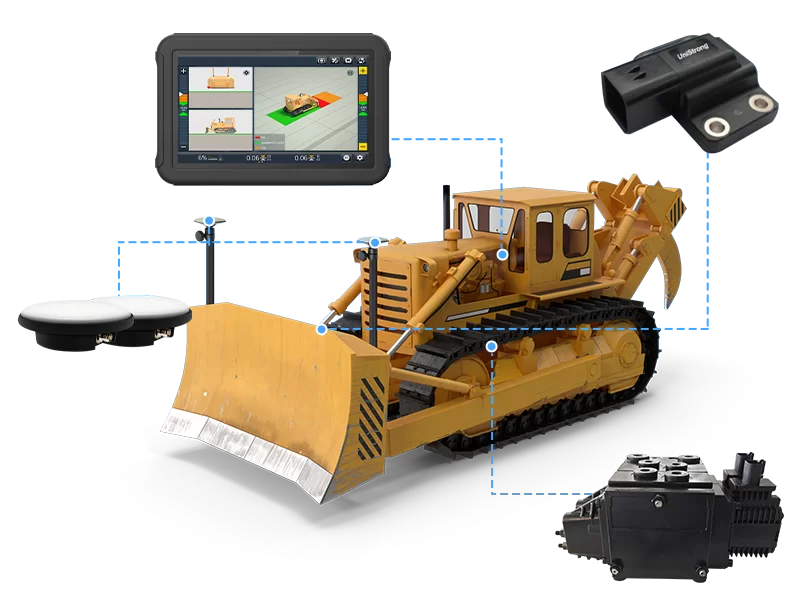
The agricultural sector is currently undergoing a digital shift, where the adoption of auto steer tractor systems is becoming essential for reducing overlap in fertilization and seeding, especially given the fragmented nature of Irish farmland.

Urban development in Dublin and Cork is increasingly relying on a total station for dense architectural measurements, yet there is a growing trend toward integrating these with satellite-based corrections to improve workflow efficiency.

Evolution of Precision Measurement in Ireland

From traditional optical tools to real-time kinematic satellite correction.

Market Development History

Until the early 2000s, Irish surveying relied heavily on mechanical theodolites and basic optical tools. The introduction of the digital total station marked the first major shift, allowing for faster data collection and reduced human error in topographic mapping.

Between 2010 and 2020, the market transitioned toward satellite-based systems. The implementation of gps diferencial technology enabled surveyors to establish high-accuracy baselines across long distances, overcoming the limitations of line-of-sight measurements.

Today, the integration of multi-constellation GNSS has eliminated the "blind spots" previously caused by Ireland's mountainous regions and heavy cloud cover, making real-time centimeter-level accuracy a standard for both construction and farming.

Future Development Trends

Integration of AI-Driven Mapping

We anticipate a surge in autonomous mapping where sensors automatically filter noise caused by dense Irish vegetation.

Hyper-Local Correction Networks

The expansion of local CORS networks will further reduce the reliance on physical base stations for RTK users.

Full-Scale Farm Automation

Moving beyond simple steering, we will see integrated systems where the receiver controls the entire implement based on soil maps.

Industry Trends and Future Outlook

Analyzing the trajectory of geospatial technology within the European regulatory framework.

Multi-Constellation Convergence
Integration of Beidou, Galileo, and GPS to ensure stability in remote Irish glens.
Eco-Precision Farming
Reducing chemical runoff in Irish waterways via precise steering and variable rate application.
Cloud-Based Data Sync
Instant synchronization between field data and office BIM models via 5G connectivity.
Hardware Modularization
Interchangeable modules allowing a single receiver to serve both a tractor and a tripod.

Industry Outlook

Looking ahead, the Irish market will move toward "Integrated Geospatial Ecosystems." This means the separation between surveying and execution will vanish; a site plan created by a surveyor will be directly uploaded to an autonomous machine for immediate implementation.

Google search trends indicate a rising interest in "sustainable precision agriculture" in the EU, suggesting that the next 3-5 years will be dominated by technology that optimizes resource use to meet strict European Green Deal standards.

Localized Applications in Ireland

Practical implementation of precision instruments across diverse Irish landscapes.

01. Peatland Restoration Mapping

Using high-precision GNSS to map carbon-rich peatlands, ensuring restoration boundaries are maintained with centimeter accuracy to satisfy environmental grants.

02. Precision Dairy Farming

Implementing auto-steering in silage harvesting to maximize yield and reduce soil compaction in the wet conditions of the Munster region.

03. Urban Infrastructure Renewal

Deploying advanced measurement tools for the upgrade of water mains in historic city centers, avoiding old underground utilities with precision mapping.

04. Wind Farm Site Surveying

Establishing precise turbine coordinates in the windy coastal regions of the West of Ireland, utilizing RTK for rapid site layout.

05. Coastal Erosion Monitoring

Using differential GPS to monitor the shift of shoreline boundaries along the Atlantic coast, providing critical data for flood defense planning.

Brand Story

Global Development History of Shanghai Newland Navigation Technology Co., Ltd.

Founding Vision

Established to bridge the gap between complex satellite data and practical field application for industry professionals.

Technological Breakthrough

Developed proprietary algorithms to improve signal acquisition in challenging environments, reducing the "time to first fix."

European Expansion

Tailored our hardware for European standards, ensuring seamless compatibility with EU satellite constellations like Galileo.

Agricultural Innovation

Launched specialized guidance systems that transformed traditional tractors into precision instruments for global farmers.

Commitment to Excellence

Continually refining the synergy between software and hardware to solve the most demanding measurement pain points worldwide.

Complete Product Portfolio for the Irish Market

From entry-level guidance to professional-grade geodetic surveying.

Common Questions in Ireland

Technical guidance for local surveying and farming challenges.

How does the Irish weather affect GNSS RTK receiver accuracy?

While heavy rain can slightly attenuate signals, our receivers use advanced filtering and high-gain antennas to maintain a stable lock even in typical Irish drizzle.

Can an auto steer tractor system work on small, irregular Irish fields?

Yes, our systems are designed for high agility, allowing for precise headland turns and narrow row management common in fragmented landscapes.

What is the difference between a total station and GNSS for urban Dublin surveys?

A total station is superior in "urban canyons" where buildings block satellites, whereas GNSS is faster for open-area perimeter mapping.

How to set up gps diferencial corrections in remote rural areas?

You can use a local base station via UHF radio or leverage NTRIP services if a cellular data connection is available in the area.

Is specialized training required for using professional surveying equipment?

While our interface is intuitive, we recommend a brief orientation to maximize the efficiency of RTK workflows and data export.

Which receiver is best for high-precision boundary markers in Ireland?

A multi-frequency GNSS receiver with RTK capability is ideal for boundary markers, providing the consistent centimeter-level accuracy required for legal land records.

Ready to Elevate Your Precision?

Our experts are ready to provide technical support and tailored solutions for your projects in Ireland.

Contact Us Now