
Shanghai Newdi Navigation Technology Co.,Ltd

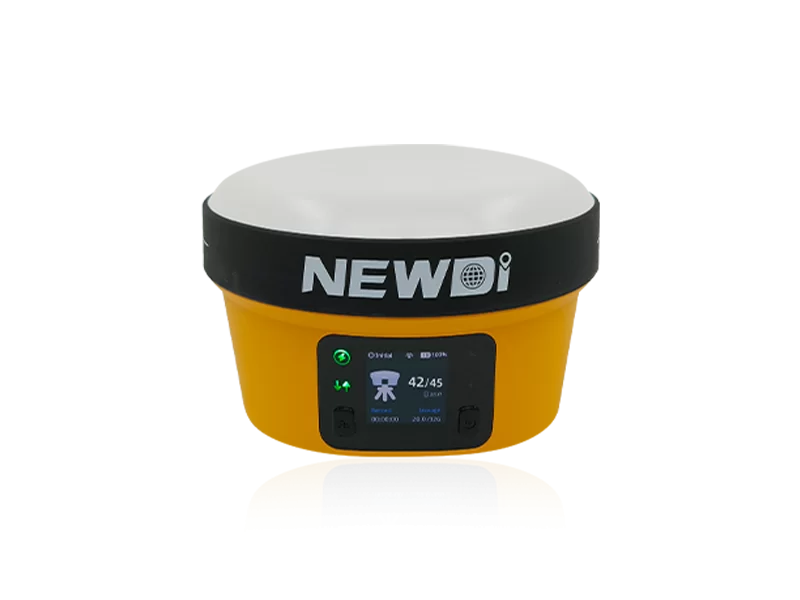
Precision gnss rtk receiver Solutions for France

Empowering French engineering and agriculture with centimeter-level accuracy and advanced geospatial intelligence.

Precision gnss rtk receiver Solutions for France

High-performance positioning tools designed to meet the rigorous standards of the French manufacturing and surveying industries, ensuring absolute precision in every coordinate.

The Landscape of Geospatial Technology in France

Analyzing the integration of high-precision measurement in the European market.

France's diverse topography, ranging from the Alpine peaks to the vast agricultural plains of the Beauce, demands highly versatile surveying equipment. The local market is characterized by a strong emphasis on precision and a rapid transition toward sustainable "Agriculture 4.0," where data-driven decisions are paramount.

Currently, the French industrial sector is heavily investing in automating infrastructure maintenance. The adoption of gps diferencial systems has become standard for large-scale public works and urban planning in cities like Paris and Lyon to minimize error margins in complex environments.

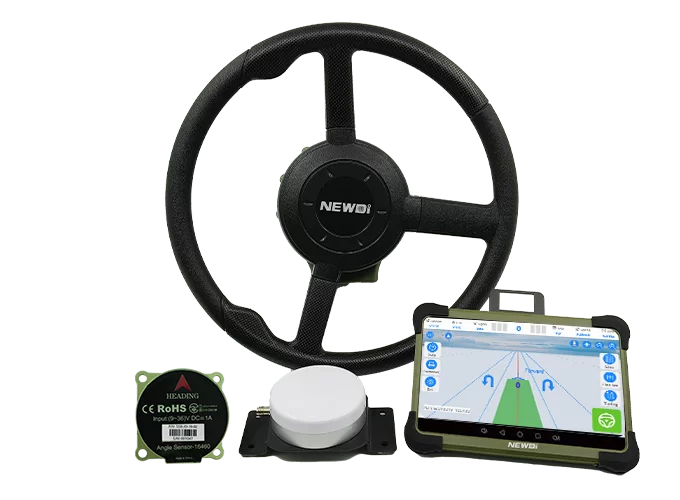
Economic pressures and labor shortages in the agricultural sector have accelerated the demand for autonomy. This has led to a surge in the implementation of the auto steer tractor systems to optimize fuel consumption and reduce overlap during planting and harvesting seasons.
Evolution of Precision Measurement in France

From traditional optics to satellite-driven autonomy.

Market Development History

In the late 20th century, French surveyors relied heavily on mechanical tools and early optical total station models. These provided the foundation for the country's detailed cadastral maps but were limited by manual data entry and weather-dependent visibility.

Between 2000 and 2015, the shift toward GNSS became evident. The introduction of Real-Time Kinematic (RTK) technology allowed for immediate corrections, transitioning the industry from post-processed data to live, centimeter-level accuracy in the field.

From 2016 to the present, the integration of IoT and AI has merged measurement with action. We have seen the evolution of receivers moving from handheld tools to embedded controllers that drive machinery autonomously across diverse terrains.

Future Development Trends

Multi-Constellation Integration

Moving beyond GPS, the French market is shifting toward seamless integration of Galileo, GLONASS, and BeiDou to ensure signal stability in dense urban canyons.

Autonomous Fleet Synergy

The future lies in the synchronization of multiple autonomous units, where a single base station manages an entire fleet of machinery through cloud-based corrections.

Real-time Digital Twin Mapping

Integrating high-speed RTK data with 3D scanning to create live digital twins of infrastructure for predictive maintenance in French smart cities.

Industry Trends and Future Outlook

Strategic directions for the French instrumentation sector.

Hyper-Precision RTK
Evolution toward sub-centimeter stability for critical infrastructure monitoring.
AI-Driven Autonomy
Integrating machine learning with GNSS to handle obstacle avoidance in real-time.
Cloud-RTK Networks
Reducing dependence on local base stations through national correction networks.
Eco-Precision Farming
Optimizing resource use to align with EU Green Deal mandates via precision guidance.

Industry Outlook

The integration of high-precision measurement tools in France is moving toward a holistic ecosystem. We expect the next 3-5 years to see a transition where surveying equipment is no longer a standalone tool but a core component of automated industrial workflows.

Based on search trends, there is a growing interest in "interoperability." French users are seeking solutions that can integrate across different brands of machinery, pushing the industry toward open-standard API communication and unified GNSS protocols.

Localized Application Scenarios in France

Real-world deployments across French industry and agriculture.

01. Vineyard Management in Bordeaux

Using precision RTK receivers to map vine rows with millimeter accuracy, enabling the use of autonomous spraying robots to reduce chemical runoff in world-class vineyards.

02. Urban Development in Île-de-France

Deploying advanced total station systems for the construction of Grand Paris Express tunnels, ensuring extreme precision in underground alignment.

03. Cereal Farming in the Paris Basin

Implementing auto steer tractor technology to manage massive wheat fields, reducing overlap by 15% and significantly lowering diesel costs.

04. Alpine Topographic Surveying

Utilizing robust GNSS equipment to monitor glacier movement and landslide risks in the Alps, providing critical safety data for local mountain communities.

05. Coastal Protection in Normandy

Employing gps diferencial systems for sea wall monitoring and coastal erosion mapping to protect historic landing sites.

Brand Story

Global Development Journey of Shanghai NCT Navigation Technology Co., Ltd.

The Foundation of Precision

Founded with a vision to democratize high-precision positioning, we began by solving the gap between industrial accuracy and field usability.

Technological Breakthroughs

Developing proprietary RTK algorithms that ensure stability in challenging environments, bridging the gap for complex European terrains.

Expanding to Europe

Establishing a strong presence in France and neighboring regions to provide localized support and industry-specific hardware configurations.

Commitment to Autonomy

Shifting focus toward the "Auto-Steer" revolution, helping farmers and engineers transition from manual guidance to full automation.

Future Vision

Aiming to be the global leader in integrated geospatial solutions, ensuring every machine on earth moves with absolute precision.

Comprehensive Product Portfolio for France

Tailored hardware and software bundles for the French market.

Frequently Asked Questions in France

Expert answers to common technical and deployment queries.

How does a GNSS RTK receiver improve accuracy over standard GPS?

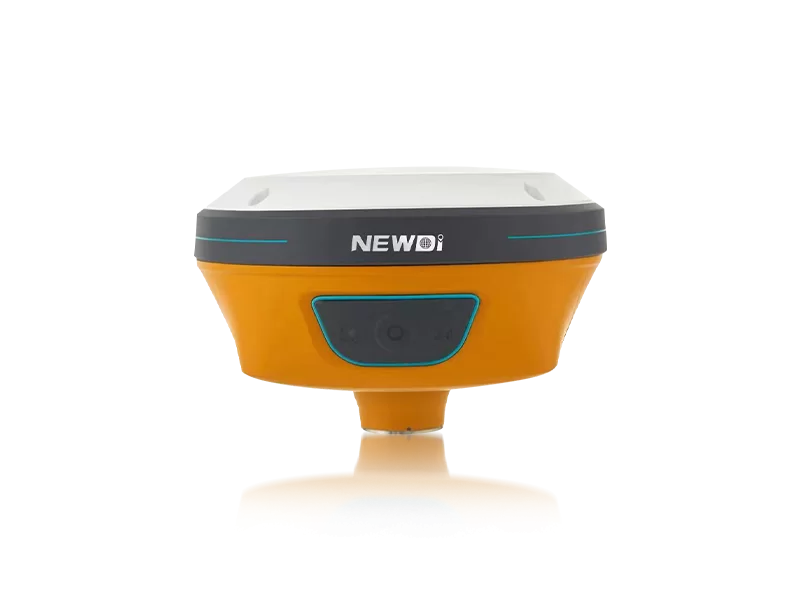
A GNSS RTK receiver uses a base station to provide real-time corrections to a rover, reducing positioning errors from several meters to just 1-2 centimeters, which is essential for precision farming and engineering.

Can an auto steer tractor system be installed on older machinery?

Yes, our retro-fit kits are designed to be compatible with a wide range of tractor brands available in France, utilizing electric steering motors and universal controllers.

What is the best surveying equipment for urban environments with high interference?

For urban areas, we recommend a combination of a multi-frequency RTK receiver and a high-precision total station to maintain accuracy where satellite signals may be blocked by buildings.

Does a gps diferencial system require a permanent internet connection?

While NTRIP corrections require the internet, you can also use a local UHF radio link between the base and rover for areas in rural France where cellular coverage is limited.

How often should a total station be calibrated for industrial use?

We recommend annual professional calibration, or more frequently if the equipment is used in extreme temperature variations, such as the seasonal shifts found in the French Alps.

What are the benefits of using multi-constellation GNSS in Europe?

Using Galileo alongside GPS and GLONASS ensures higher satellite availability and faster signal locking (TTFF), which is critical for maintaining a "Fixed" RTK solution during operation.

Ready to Optimize Your Precision?

Our experts are ready to deploy the most advanced geospatial solutions across France.

Contact Us Now