
Shanghai Newdi Navigation Technology Co.,Ltd

Precision gnss rtk receiver Solutions for Cuba's Infrastructure

Empowering Cuban engineering and agriculture with high-precision geospatial measurement and automated guidance systems.

Precision gnss rtk receiver Solutions for Cuba's Infrastructure

Integrating advanced satellite positioning and automated steering to optimize land management and construction across the Cuban archipelago.

Geospatial Engineering Status in Cuba

Analyzing the integration of high-precision measurement tools in the Caribbean environment.

In Cuba, the demand for professional surveying equipment is driven by the need to modernize aging infrastructure and optimize large-scale state agricultural projects. The humid tropical climate and coastal salinity present unique challenges for electronic instrument durability.

Currently, there is a significant transition from traditional optical methods to satellite-based positioning. The adoption of gps diferencial technology has become crucial for correcting atmospheric delays typical of the Caribbean region, ensuring centimeter-level accuracy.

Despite economic constraints, the drive toward "Precision Agriculture" is pushing the adoption of automated systems to reduce waste and increase yield in sugar cane and tobacco plantations, necessitating robust hardware that can withstand harsh field conditions.

Evolution of Measurement Technology in Cuba

From manual theodolites to autonomous machine guidance.

Market Development History

Between 1990 and 2010, the Cuban market relied heavily on mechanical and early electronic total station units. These tools provided the foundation for urban planning in Havana and Santiago de Cuba but were limited by manual data entry and line-of-sight requirements.

From 2010 to 2020, the introduction of GNSS technology revolutionized the sector. The shift toward real-time kinematic (RTK) corrections allowed surveyors to cover vast rural areas more efficiently, reducing the time required for cadastral surveys by over 60%.

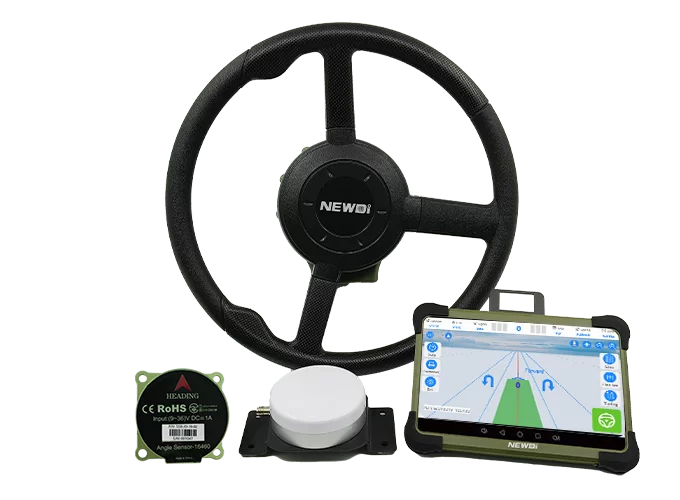
Entering the 2020s, the focus has shifted toward machine integration. The emergence of the auto steer tractor has transformed agricultural efficiency, moving the industry from simple mapping to active, automated field execution.

Future Development Trends

Multi-Constellation Integration

Moving beyond GPS, future systems will integrate Galileo, Beidou, and GLONASS to ensure signal stability in Cuba's dense tropical canopies.

Cloud-Based GIS Synchronization

Integration between field receivers and cloud-based Geographic Information Systems (GIS) will allow real-time project monitoring from central offices.

AI-Driven Terrain Analysis

The next iteration of measurement tools will use AI to automatically classify terrain types, optimizing the path for automated machinery.

Industry Trends & Future Outlook

Predicting the next wave of geospatial innovation in North America - Cuba.

Autonomous Farming
Rapid adoption of steering automation to maximize crop yield in state-managed farms.
RTK Network Expansion
Expansion of base station networks to provide seamless RTK corrections across the island.
Digital Twin Urbanism
Using precision scanning to create 3D digital twins of historical sites in Old Havana.
Eco-Sustainable Mapping
Implementing precision mapping to prevent soil erosion and protect coastal mangroves.

Industry Outlook

Google search trends indicate a rising interest in "Smart Farming" and "Infrastructure Digitalization" within the region. This suggests a pivot from purely descriptive surveying to prescriptive spatial management.

Over the next 3-5 years, we expect a consolidation of hardware and software, where the device is no longer just a tool but a node in a wider connected ecosystem of agricultural and urban data.

Localized Application Scenarios in Cuba

Practical deployments of precision instruments in the Cuban landscape.

01. Sugar Cane Plantation Automation

Deploying auto steer tractor systems to ensure perfectly parallel rows, reducing overlap and optimizing fertilizer application in the central plains.

02. Coastal Erosion Monitoring

Using gnss rtk receiver units to track shoreline retreat and monitor the stability of sea walls along the northern coast.

03. Historic Urban Restoration

Employing a total station for millimeter-accurate mapping of colonial architecture to guide structural reinforcement without damaging heritage materials.

04. National Cadastral Updating

Utilizing gps diferencial networks to redefine rural land boundaries, resolving disputes and formalizing land use rights.

05. Hydroelectric Dam Surveillance

Implementing a hybrid of surveying equipment to monitor micro-movements in dam walls, ensuring public safety in mountainous regions.

Brand Story

Global Development History of Shanghai NCT Navigation Technology Co., Ltd.

The Foundation of Precision

Started with a mission to democratize high-precision GNSS technology, bridging the gap between expensive enterprise tools and field usability.

Technological Breakthrough

Developed proprietary RTK algorithms that significantly reduced convergence time, enabling faster setup for surveyors worldwide.

Global Expansion

Expanded operations into North America and the Caribbean, adapting hardware to withstand extreme humidity and temperature variations.

Agricultural Innovation

Launched the integrated auto-steer line, transforming traditional tractors into precision-guided machines for sustainable farming.

Commitment to Excellence

Today, we continue to solve the pain points of geospatial measurement, ensuring accuracy in every coordinate across the globe.

Comprehensive Product Portfolio for Cuba

Our curated selection of high-precision instruments tailored for the Caribbean environment.

Local FAQ for Precision Surveying in Cuba

Expert answers to common technical questions regarding geospatial equipment.

How does humidity affect the accuracy of a gnss rtk receiver in Cuba?

High humidity can cause signal attenuation. Our receivers use advanced multi-frequency filters to mitigate atmospheric interference and maintain centimeter-level precision.

Can a total station be used for large-scale agricultural mapping?

While a total station is ideal for high-precision boundary work, for large-scale farms, we recommend combining it with GNSS equipment for faster coverage.

Is the auto steer tractor compatible with older Cuban tractor models?

Yes, our steering systems are designed with universal mounting kits and adaptable controllers to retrofit a wide range of mechanical tractor models.

What is the advantage of using gps diferencial over standard GPS?

Differential GPS uses a fixed base station to correct errors in real-time, moving accuracy from several meters down to a few centimeters.

What surveying equipment is best for coastal mangrove mapping?

We recommend lightweight, waterproof RTK receivers with external antennas to maintain signal lock in densely forested coastal areas.

How often should I calibrate my surveying instruments in tropical climates?

Due to temperature fluctuations, we recommend monthly calibration checks to ensure no thermal drift has occurred in the electronic sensors.

Get Expert Consultation Today

Ready to modernize your infrastructure or agricultural operations in Cuba? Our team is here to provide the perfect geospatial solution.

Contact Us Now