


Shanghai Newdi Navigation Technology Co.,Ltd

Precision GNSS RTK Receiver Solutions for South Sudan Infrastructure

Empowering South Sudan's agricultural and construction sectors with high-precision geospatial intelligence and automated guidance systems.

Precision GNSS RTK Receiver Solutions for South Sudan Infrastructure

We provide cutting-edge surveying equipment tailored for the unique topographical and climatic challenges of South Sudan, ensuring centimeter-level accuracy for land management.

Geospatial Challenges in South Sudan's Terrain

Analyzing the current state of measurement and mapping technology in the Nile Basin region.

South Sudan's geography, characterized by vast wetlands and the Sudd swamp, presents extreme challenges for traditional surveying equipment. The high humidity and seasonal flooding often render traditional optical measurements impractical, necessitating robust, weather-proof digital solutions.

Currently, the local industry relies heavily on legacy tools, but there is a critical shift toward using a total station for urban planning in Juba. However, the lack of stable base station networks has historically hindered the widespread adoption of real-time kinematics.

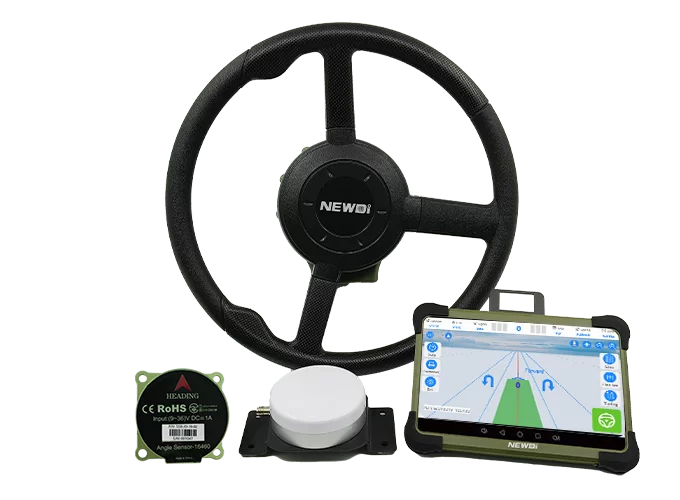
In the agricultural sector, the transition from manual steering to an auto steer tractor system is beginning to emerge as the government seeks to modernize food production and reduce overlap in seeding and fertilization across the fertile plains.
Evolution of Measurement Technology in South Sudan

From manual chains to satellite-driven precision.

Market Development History

Between 2000 and 2010, land surveying in South Sudan was primarily mechanical, relying on basic theodolites and manual mapping, which were slow and prone to human error in the dense bush terrain.

From 2011 to 2020, the introduction of electronic distance measurement (EDM) and the first generation of gps diferencial tools allowed for faster boundary demarcation during the post-independence land redistribution phase.

Since 2021, the integration of multi-constellation GNSS has revolutionized the field, allowing surveyors to maintain signal locks even under heavy canopy or during the volatile weather patterns of the region.

Future Development Trends

Satellite-Based Augmentation Systems (SBAS)

Increased reliance on SBAS to provide high-accuracy corrections in remote areas where physical base stations are impossible to deploy.

Autonomous Agricultural Integration

The shift toward fully integrated auto steer tractor fleets to maximize yield in the Southern agricultural belt.

Cloud-Based GIS Mapping

Moving from local data storage to cloud-synchronized GIS, enabling real-time infrastructure monitoring from central government offices.

Industry Outlook & Future Trends

Predicting the trajectory of precision instruments in the East African corridor.

RTK Convergence
Mass adoption of network RTK to eliminate the need for local base stations in rural South Sudan.
Smart Farming
Integrating gps diferencial data with soil sensors for precision agriculture.
Hybrid Surveying
Combining total station precision with GNSS speed for hybrid urban mapping.
IoT Integration
Real-time telemetry for construction machinery monitoring across large-scale road projects.

Industry Outlook

Over the next 3-5 years, Google search trends indicate a rising demand for "low-cost high-precision" tools in emerging African markets. This suggests that South Sudan will move away from expensive, proprietary systems toward open-platform RTK receivers that offer interoperability.

The integration of AI-driven data processing will further reduce the time required for post-processing survey data, allowing infrastructure projects in Juba and Wau to be completed with significantly higher efficiency and less waste.

Localized Applications in South Sudan

Practical implementation of precision instruments in diverse local environments.

01. Oil Field Pipeline Mapping

Using surveying equipment to map pipeline corridors through the Upper Nile region, ensuring precise placement and leak detection monitoring.

02. Precision Maize Farming

Implementing an auto steer tractor system to optimize planting rows in the Equatoria region, reducing fuel consumption and seed waste.

03. Urban Redevelopment in Juba

Deploying a total station for high-accuracy cadastral surveys to resolve land ownership disputes and plan new road networks.

04. Bridge Engineering over the Nile

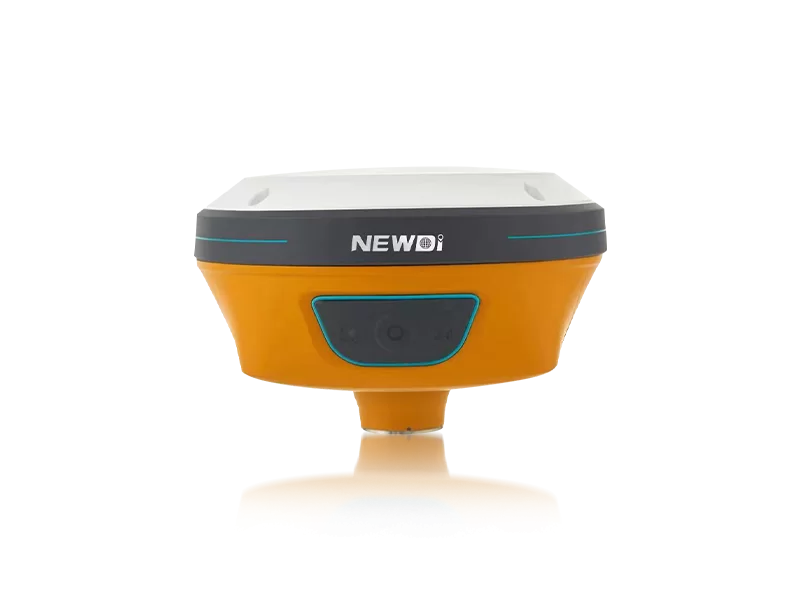
Utilizing gnss rtk receiver technology to ensure structural alignment of bridge pylons in shifting riverbed soils.

05. Flood Plain Zoning

Using gps diferencial systems to create high-resolution digital elevation models (DEM) for flood prevention and drainage planning.

Brand Story

Global Development Journey of Shanghai NCT Navigation Technology Co., Ltd.

Foundational Innovation

Established with a mission to bridge the gap between complex satellite data and practical field application for engineers worldwide.

Technological Breakthrough

Developed proprietary RTK algorithms that maintain stability in challenging environments with high signal interference.

Global Expansion

Extended our footprint into Africa, adapting our hardware to withstand extreme heat and dust conditions typical of the region.

Agricultural Revolution

Launched advanced auto-steering solutions to empower farmers in developing nations to increase food security through precision.

Vision for the Future

Continuing to innovate in the field of high-precision positioning to make professional surveying accessible and affordable globally.

Complete Precision Product Suite for South Sudan

A comprehensive range of instruments designed for durability and accuracy in the Nile Basin.

South Sudan Geospatial FAQ

Expert answers to common technical queries regarding surveying in the region.

How does a gnss rtk receiver handle signal loss in the Sudd wetlands?

Our receivers utilize multi-constellation support (GPS, GLONASS, BeiDou, Galileo) to maximize satellite availability, ensuring a stable fix even in dense vegetation.

Can an auto steer tractor improve crop yield in South Sudan's soil?

Yes, by reducing overlap during planting and fertilization, these systems minimize waste and ensure uniform crop distribution across large plains.

What is the difference between a total station and GNSS for urban Juba?

A total station provides superior accuracy for short-range, line-of-sight construction, while GNSS is ideal for large-scale mapping where satellites are visible.

Is gps diferencial technology suitable for remote border mapping?

Absolutely. Differential GPS corrects atmospheric errors, making it the standard for high-precision border demarcation in remote areas.

Which surveying equipment is best for extreme heat and dust?

We recommend equipment with an IP67 or higher rating, which provides complete protection against dust ingress and resistance to water immersion.

How often should RTK base stations be calibrated in East Africa?

Calibration depends on the stability of the ground, but we recommend seasonal checks to account for soil shifts during the rainy season.

Get Expert Technical Support

Ready to upgrade your infrastructure with precision tools? Our specialists are available to assist clients across South Sudan.

Contact Us Now