
Shanghai Newdi Navigation Technology Co.,Ltd

Precision Positioning Solutions with gnss rtk receiver in Russia

Empowering Russian infrastructure and agriculture with high-precision geospatial measurement and automated guidance technologies tailored for harsh Eurasian environments.

Precision Positioning Solutions with gnss rtk receiver in Russia

Integrating advanced surveying equipment and automated steering to optimize land management and engineering accuracy across the Russian Federation.

The Landscape of Precision Measurement in Russia

Analyzing the intersection of vast geography and high-precision instrumentation needs.

Russia's unique geographical scale presents significant challenges for traditional measurement. The reliance on high-stability surveying equipment is critical due to the extreme temperature fluctuations—from Siberian frosts to Southern heat—which can cause material expansion and contraction, affecting measurement precision.

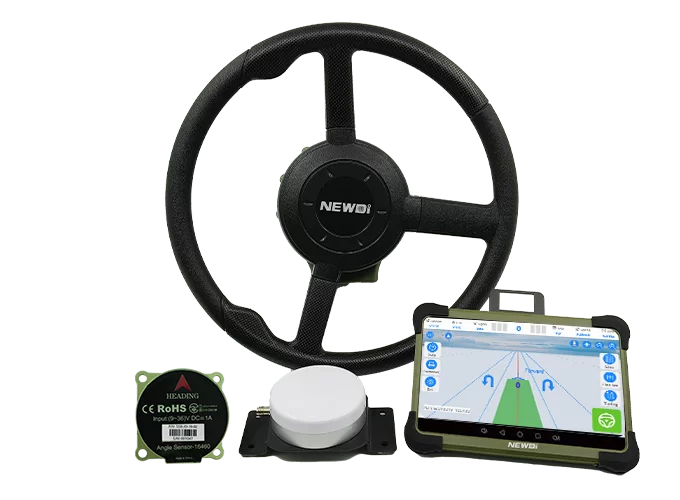
In the agricultural sector, the shift toward "Precision Farming" is accelerating. The adoption of the auto steer tractor has become a necessity for managing the massive "black earth" (Chernozem) regions, reducing overlap during sowing and fertilization to maximize yield across thousands of hectares.

Furthermore, the demand for gps diferencial corrections has surged as Russia modernizes its transport corridors and energy pipelines, requiring centimeter-level accuracy in remote areas where traditional ground control points are scarce.
Evolution of Geodetic Technology in Eurasia

From optical measurements to real-time satellite kinematics.

Market Development History

During the late 20th century, the Russian market relied heavily on optical-mechanical instruments. The total station became the gold standard in the 1990s, introducing digital distance measurement (EDM) to replace manual chaining in urban construction.

By the mid-2000s, the transition to GNSS technology began. Early adoption focused on static GPS surveys, but the emergence of RTK (Real-Time Kinematic) shifted the paradigm, allowing engineers to obtain instant coordinates without lengthy post-processing.

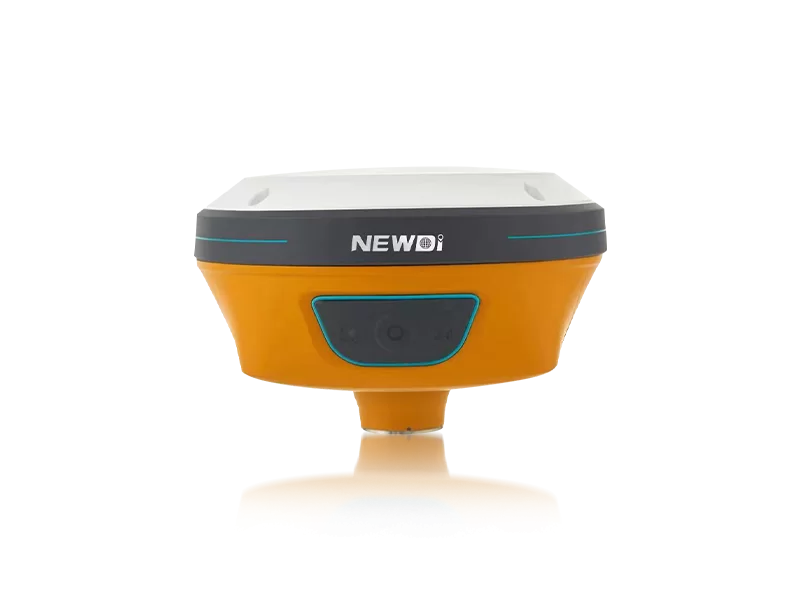
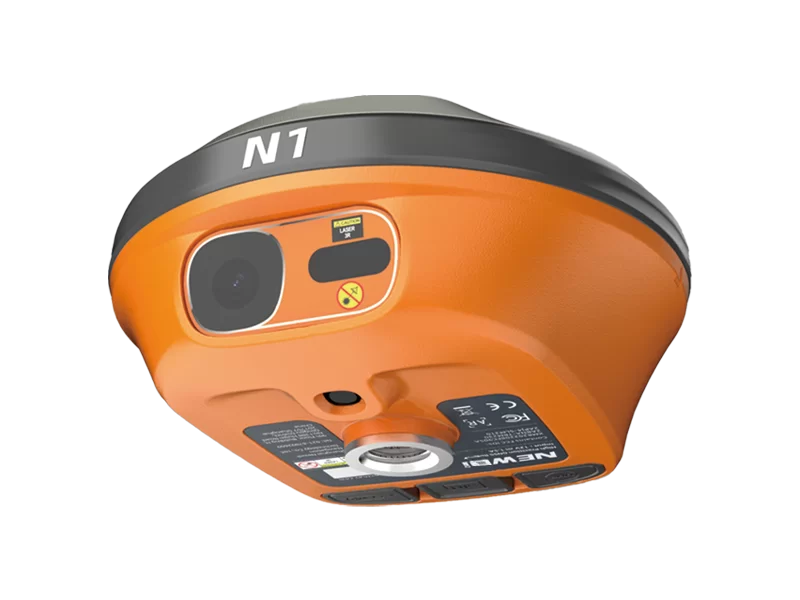
From 2015 to the present, the integration of GNSS with machinery has peaked. The synergy between a gnss rtk receiver and hydraulic steering systems has transformed the Russian agro-industrial complex into a data-driven operation.

Future Development Trends

Multi-Constellation Integration

Moving beyond GPS to integrate GLONASS, BeiDou, and Galileo simultaneously to ensure signal availability in the high latitudes of Northern Russia.

AI-Driven Terrain Mapping

Integration of LiDAR with traditional surveying tools to create real-time 3D digital twins of infrastructure projects.

Full Autonomy in Agriculture

The evolution of the auto steer tractor into fully autonomous robotic platforms that require no human operator in the cabin.

Industry Trends and Future Outlook

Strategic projections for the measurement and navigation industry in Russia.

Hyper-Local RTK Networks
Expansion of CORS networks across Siberia to provide seamless gps diferencial corrections.
Agricultural Automation
Integration of ISOBUS standards with the auto steer tractor for precise variable rate application.
Cloud-Based GIS
Real-time synchronization of data from a total station to centralized cloud management systems.
Ruggedization Standards
Developing hardware that withstands -40°C for uninterrupted surveying equipment operations.

Industry Outlook

The Russian measurement market is pivoting toward software-defined hardware. We expect a surge in demand for integrated ecosystems where the gnss rtk receiver is not just a tool but a node in a larger IoT network for industrial automation.

Based on Google search trends in the region, there is an increasing volume of queries regarding "autonomous farming" and "RTK accuracy," suggesting that the market is moving from basic digitalization to intelligent automation.

Localized Application Scenarios in Russia

Real-world deployment of high-precision instruments in diverse Russian environments.

01. Large-Scale Wheat Farming in Rostov

Deploying the auto steer tractor to manage 5,000+ hectare fields, ensuring precise seed placement and reducing fuel consumption by 15% through optimized pathing.

02. Arctic Pipeline Monitoring in Yamalo-Nenets

Using a ruggedized gnss rtk receiver to monitor pipeline deformation caused by permafrost melting, providing millimeter-level alerts.

03. Urban Reconstruction in Moscow

Utilizing a total station for high-density urban surveying to ensure architectural alignment in historical districts during modern utility upgrades.

04. Forest Management in the Taiga

Applying surveying equipment to map boundary lines in dense forests where satellite visibility is limited, combining RTK with traditional geodetic methods.

05. Road Infrastructure in the Far East

Implementing gps diferencial corrections for the construction of new highways, ensuring precise grading across varying terrains from mountains to marshes.

Brand Story

Global Development Journey of Shanghai NCT Navigation Technology Co., Ltd.

Foundational Innovation

Established with a mission to bridge the gap between complex satellite data and practical field application in surveying.

RTK Technological Breakthrough

Developed proprietary algorithms to enhance the stability of the gnss rtk receiver in challenging environments.

Agricultural Integration

Expanded into the AgTech sector, creating the first seamless interface between GNSS and tractor steering systems.

Global Market Expansion

Successfully entered the Eurasian market, tailoring products to withstand the extreme climates of Russia and Northern Europe.

Future Vision 2030

Aiming to lead the transition toward fully autonomous geospatial intelligence and zero-error measurement systems.

Comprehensive Precision Portfolio for the Russian Market

From individual receivers to full-scale agricultural automation kits.

Frequently Asked Questions in Russia

Expert answers to common technical queries regarding precision measurement.

How does the gnss rtk receiver perform in high-latitude Russian regions?

Our receivers are optimized for high latitudes, utilizing multi-constellation support (GPS, GLONASS, Galileo) to ensure a strong satellite lock even when the horizon is obstructed or at extreme northern angles.

Can an auto steer tractor be installed on older Soviet-era machinery?

Yes, our systems are designed for universal compatibility. We provide mechanical steering kits and electronic controllers that can be retrofitted to most traditional tractor models used in Russian farming.

What is the advantage of a total station over GPS in urban Moscow?

In "urban canyons" where tall buildings block satellite signals, a total station provides absolute precision using optical measurements, making it indispensable for urban construction.

How do I set up a gps diferencial base station in remote areas?

For remote sites, we recommend a local Base-Rover setup. The base station is placed on a known point and transmits corrections via UHF radio to the rover, ensuring centimeter accuracy without internet access.

Is the surveying equipment resistant to extreme Siberian winters?

Our hardware is industrial-grade, featuring specialized thermal insulation and components rated for operation down to -40°C, ensuring reliability during the harshest winter cycles.

What correction services are best for Russian agricultural land?

Depending on the region, we suggest a combination of NTRIP (where network coverage is available) and local RTK bases for the most consistent accuracy across vast rural estates.

Get Expert Geospatial Support

Ready to modernize your infrastructure or farm? Contact our technical team for customized precision solutions in Russia.

Contact Us Now