

Shanghai Newdi Navigation Technology Co.,Ltd

High-Precision gnss rtk receiver Solutions for Bahrain's Infrastructure

Empowering the Kingdom of Bahrain with next-generation geospatial intelligence and precision positioning for urban development and agriculture.

High-Precision gnss rtk receiver Solutions for Bahrain's Infrastructure

Integrating cutting-edge satellite positioning with local Bahraini surveying needs to ensure millimeter-level accuracy in the most challenging environments.

The Current State of Surveying in Bahrain

Navigating the intersection of rapid urbanization and extreme climatic conditions.

In Bahrain, the demand for high-accuracy surveying equipment is driven by massive land reclamation projects and the expansion of the Manama financial district. However, the intense heat and high humidity of the Gulf climate often degrade the performance of standard electronic instruments, requiring specialized hardware with higher thermal resilience.

The local market is currently transitioning from manual data collection to automated workflows. The integration of a total station remains vital for dense urban areas where satellite signals are obstructed by skyscrapers, but there is a growing reliance on real-time kinematic (RTK) networks to speed up cadastral mapping.

Furthermore, Bahrain's agricultural sector, though small, is undergoing a digital transformation. The adoption of auto steer tractor systems is becoming a priority to optimize water usage and land productivity in the arid soil of the archipelago.


Evolution of Precision Measurement in Bahrain

From traditional optical tools to the era of satellite-driven automation.

Market Development History

Between 2000 and 2010, the industry relied heavily on traditional optical theodolites and early-stage electronic distance measurement. This era was characterized by labor-intensive field work and manual plotting of topographical maps for Bahrain's early infrastructure expansions.

From 2011 to 2020, the shift toward gps diferencial systems allowed for significantly faster data acquisition. This period saw the introduction of the first dedicated GNSS base stations across the islands, reducing the time required for large-scale site surveys from weeks to days.

Since 2021, the focus has shifted toward "Real-Time" everything. The convergence of IoT and GNSS has enabled the seamless use of RTK receivers that provide instant corrections, eliminating the need for time-consuming post-processing in the office.

Future Development Trends

AI-Driven Terrain Analysis

Integration of machine learning with GNSS data to predict soil subsidence in reclaimed coastal areas of Bahrain.

Multi-Constellation Fusion

Moving beyond GPS to integrate BeiDou, GLONASS, and Galileo for unwavering signal stability in dense urban canyons.

Autonomous Farming Ecosystems

The evolution of steering systems into fully autonomous fleets for sustainable desert agriculture.

Industry Trends & Future Outlook for Bahrain

Strategic foresight into the next 5 years of geospatial technology.

Cloud-Based GIS Integration
Real-time synchronization of field data to cloud platforms for instant project management.
RTK Network Expansion
Deployment of more CORS stations across Bahrain to eliminate signal blind spots.
Hardware Ruggedization
Development of equipment specifically rated for 50°C+ heat and high salinity air.
UAV-GNSS Synergy
Combining drones with RTK receivers for rapid 3D modeling of construction sites.

Industry Outlook

Based on search trends and the Bahrain Economic Vision 2030, the demand for precision instrumentation will shift from basic land measurement to complex digital twin creation. We expect a 25% increase in the adoption of high-end RTK systems as the government mandates BIM (Building Information Modeling) for all public works.

The convergence of agricultural technology and urban planning will lead to a unified demand for high-precision satellite data, making the transition to multi-frequency receivers an absolute necessity for all local professionals.

Localized Application Scenarios in Bahrain

Practical implementations of our technology in the unique environment of the Kingdom.

01. Coastal Land Reclamation Mapping

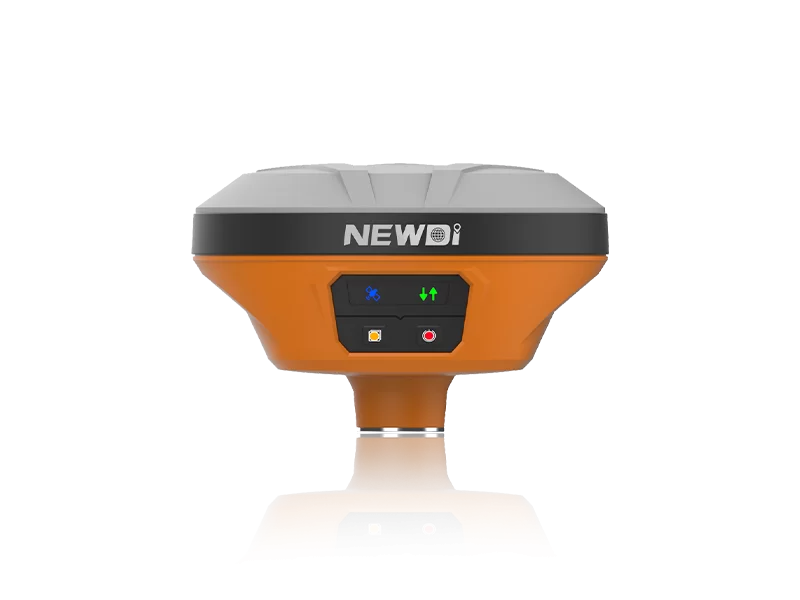
Utilizing a gnss rtk receiver to define precise boundaries for new artificial islands and coastal extensions, ensuring stability against sea-level changes.

02. Manama Urban Infrastructure Audits

Deploying a total station for high-precision measurements in the heart of the capital, where satellite signals are hindered by high-rise buildings.

03. Precision Desert Farming

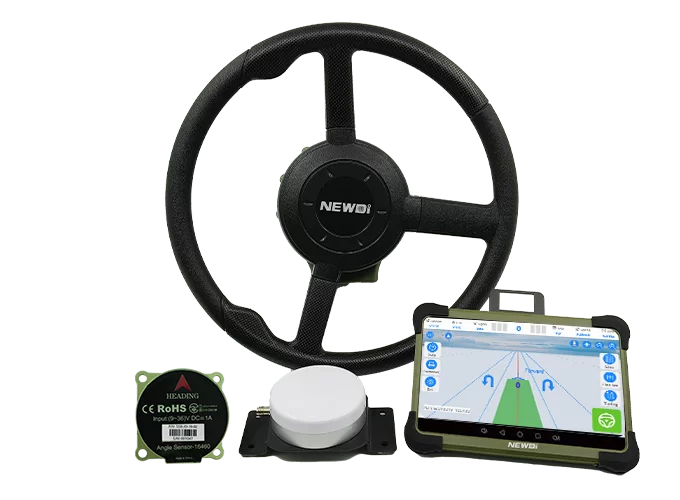
Implementing an auto steer tractor to optimize planting rows and irrigation piping, reducing waste in Bahrain's scarce water resources.

04. Oil & Gas Pipeline Surveying

Using gps diferencial technology to map underground utility networks and pipelines with centimeter accuracy to prevent drilling accidents.

05. National Cadastral Boundary Updates

Updating land ownership records across various villages using integrated surveying equipment to resolve boundary disputes through digital verification.

Brand Story

Global Development History of Shanghai NCT Navigation Technology Co., Ltd.

Foundation & Precision Vision

Started with a mission to bridge the gap between complex satellite data and practical field application, focusing on core RTK algorithms.

Technological Breakthroughs

Developed proprietary multi-frequency signal processing modules that significantly reduced initialization time for field surveyors.

Global Market Expansion

Expanded operations into the Middle East and Asia, tailoring hardware to survive extreme heat and dust environments.

Agricultural Automation Pivot

Launched advanced auto-steering solutions, integrating precision GNSS with tractor hydraulics for the global smart-farming market.

Eco-System Integration

Currently building a comprehensive geospatial ecosystem combining hardware, cloud software, and AI for sustainable urban growth.

Comprehensive Precision Product Portfolio for Bahrain

A curated selection of instruments designed for the Gulf's unique geological and climatic requirements.

Common Questions in Bahrain's Surveying Sector

Technical guidance and market-specific answers for local professionals.

How does high heat in Bahrain affect GNSS RTK receiver accuracy?

Extreme heat can cause thermal drift in electronic oscillators. Our receivers utilize temperature-compensated crystals and ruggedized housing to maintain millimeter precision even in 50°C weather.

Can a total station be used for all urban surveys in Manama?

A total station is ideal for areas with "urban canyons" where satellite signals are blocked. For maximum efficiency, we recommend a hybrid approach using both RTK and total stations.

What is the advantage of gps diferencial over standard GPS for land reclamation?

Standard GPS has a margin of error of several meters. Differential GPS (DGPS) uses a fixed base station to provide corrections, reducing error to centimeters, which is critical for coastal boundaries.

Is auto steer tractor technology suitable for small Bahraini farms?

Yes. Even on small plots, auto-steering reduces overlap and gaps in irrigation and fertilization, leading to significant water savings and increased crop yield.

What surveying equipment is best for mapping sandy terrain?

For sandy, open terrains, a combination of GNSS RTK receivers and drones (UAVs) is most efficient, as it allows for rapid coverage without the need for extensive physical markers.

How do I maintain precision instruments in a high-salinity environment?

Regular cleaning of optical lenses with specialized solutions and ensuring that all electronic ports are sealed against salty moisture is essential for prolonging equipment life in Bahrain.

Ready to Elevate Your Precision?

Contact our specialist team today for a customized geospatial consultation tailored to the specific needs of Bahrain.

Contact Us Now