
Shanghai Newdi Navigation Technology Co.,Ltd

High-Precision gnss rtk receiver Solutions for Bangladesh Infrastructure

Empowering Bangladesh's land management and agricultural modernization with world-class geospatial intelligence and automated measurement technologies.

High-Precision gnss rtk receiver Solutions for Bangladesh Infrastructure

Integrating advanced surveying equipment to enhance accuracy in coastal engineering, urban planning, and sustainable farming across the delta regions of Bangladesh.

The Current State of Geospatial Measurement in Bangladesh

Navigating the challenges of a high-density, flood-prone riverine landscape.

Bangladesh faces unique geographical challenges, where the shifting nature of the Ganges-Brahmaputra delta requires constant re-mapping. Traditional methods are no longer sufficient for the scale of the "Delta Plan 2100," leading to a surge in demand for high-end total station systems for precise boundary demarcation.

The local construction sector is rapidly evolving, yet many projects still struggle with signal interference in dense urban centers like Dhaka. The adoption of gps diferencial technology has become critical to mitigate these errors and ensure the structural integrity of new bridges and metros.

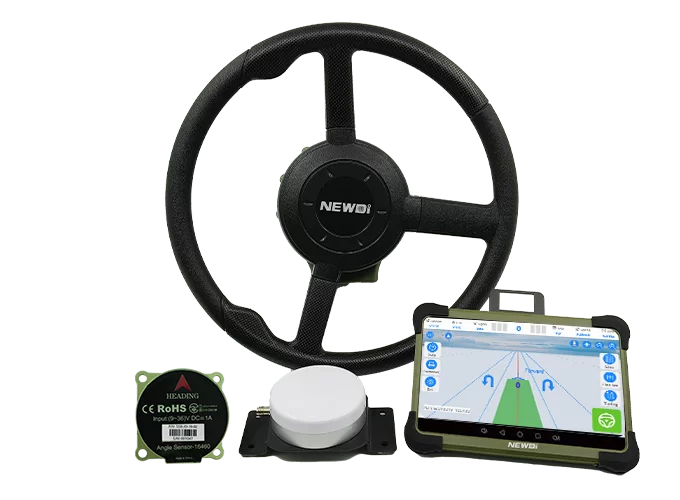
In the agricultural heartlands, there is a growing realization that food security depends on precision. Farmers are transitioning from manual seeding to incorporating auto steer tractor systems to maximize land utilization in fragmented plots.
Evolution of Surveying Technology in the Bengal Basin

From optical measurements to real-time satellite kinematic corrections.

Market Development History

Between 1990 and 2010, the industry relied heavily on basic theodolites and manual chaining. The introduction of the first digital total station units in the early 2000s marked a shift toward digitized data collection, though post-processing remained time-consuming.

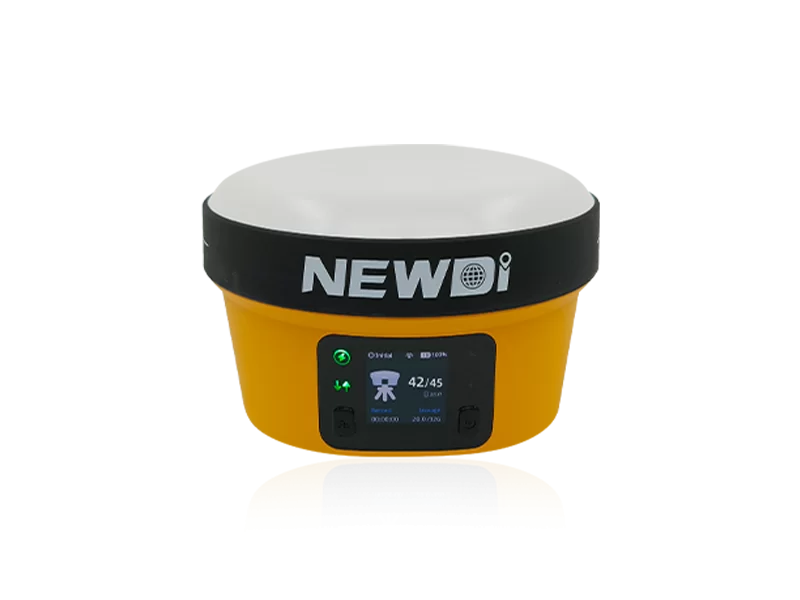
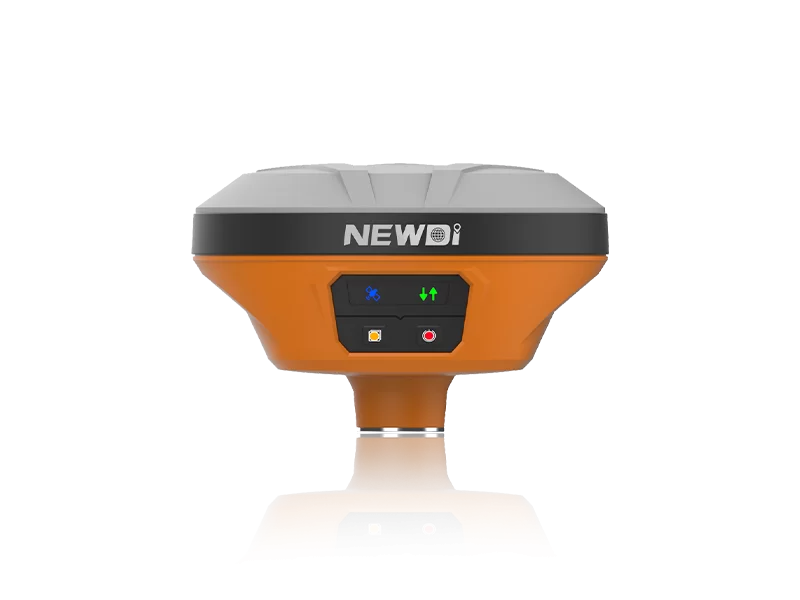
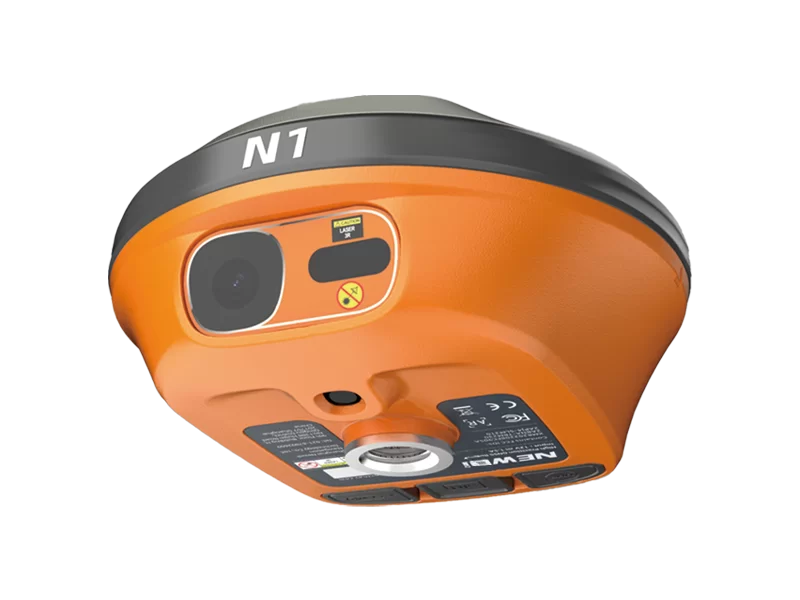
From 2010 to 2020, the shift toward GNSS became evident. The deployment of local CORS (Continuously Operating Reference Stations) allowed the gnss rtk receiver to provide centimeter-level accuracy in real-time, drastically reducing survey timelines for road projects.

Since 2021, the focus has shifted toward automation. The integration of steering controllers and satellite guidance has brought the auto steer tractor into the commercial farming landscape, optimizing input costs for rice and jute production.

Future Development Trends

Integration of Multi-Constellation GNSS

Future systems will move beyond GPS, utilizing BeiDou, Galileo, and GLONASS simultaneously to maintain locks under the heavy canopy of tropical vegetation.

AI-Driven Terrain Modeling

The fusion of surveying equipment with AI will allow for predictive flood modeling and automatic contour adjustment.

Hyper-Local Correction Networks

Development of denser NTRIP networks will make gps diferencial corrections available even in the remotest chars of the river islands.

Future Outlook for Precision Instruments in Bangladesh

Analyzing the trajectory of measurement technology through the lens of Google Search trends and infrastructure growth.

RTK Network Expansion
Increasing search volume for real-time kinematic services indicates a shift toward subscription-based correction models.
Agri-Tech Automation
Rising demand for precision farming tools to combat shrinking arable land and increase crop yields.
Smart Urban Planning
Adoption of BIM and GIS integrated tools for sustainable city growth in the Dhaka and Chittagong corridors.
Climate Resilience Mapping
Using high-accuracy sensors for sea-level rise monitoring and embankment construction.

Industry Outlook

The next 3-5 years will see a convergence of satellite positioning and cloud-based collaboration. We expect a significant increase in the use of integrated surveying equipment that can feed data directly into national land databases in real-time.

Furthermore, the democratization of precision tools will allow smaller engineering firms in Bangladesh to compete on a global scale, leveraging affordable yet powerful RTK and differential GPS technologies to deliver world-class infrastructure.

Localized Application Scenarios in Bangladesh

Solving real-world challenges with precision measurement.

01. Coastal Embankment Monitoring

Using gnss rtk receiver to monitor millimeter-level subsidence in the coastal belts, ensuring that flood protection barriers are maintained against rising sea levels.

02. Precision Rice Cultivation

Implementing auto steer tractor technology in the northern regions to optimize fertilizer application and reduce overlapping, increasing yield per hectare.

03. Urban Metro Rail Alignment

Deploying high-accuracy total station units for the precise alignment of piers and tracks in Dhaka's congested urban environment.

04. Cadastral Land Re-surveying

Utilizing gps diferencial to resolve land ownership disputes by providing indisputable boundary coordinates in rural villages.

05. Bridge Foundation Surveying

Combining multiple types of surveying equipment to ensure the stability of deep-pile foundations for major river crossings.

Brand Story

Global Development Journey of Shanghai NCT Navigation Technology Co., Ltd.

Founding Vision

Born from a commitment to precision, NCT Navigation began with the goal of eliminating the complexity of high-end geospatial data for everyday users.

Technological Breakthrough

We pioneered integrated RTK modules that combined robustness with ease of use, setting new standards for reliability in harsh environments.

Global Expansion

Expanding from Asia to the rest of the world, we tailored our solutions to meet the specific regulatory and geographic needs of diverse markets.

Precision Agriculture Leap

We successfully bridged the gap between surveying and farming by developing advanced steering controllers for various tractor brands.

Sustainable Future

Today, we focus on ESG-driven technology, ensuring that our measurements contribute to a more sustainable and accurately mapped planet.

Comprehensive Measurement Portfolio for Bangladesh

From urban infrastructure to rural farming, our tools provide the accuracy Bangladesh needs.

Local Frequently Asked Questions

Everything you need to know about implementing precision instruments in Bangladesh.

How does a gnss rtk receiver perform in Dhaka's urban canyons?

Our receivers use multi-frequency and multi-constellation tracking to maintain signal locks even in dense areas, though combining them with a total station is recommended for absolute precision under heavy cover.

Can auto steer tractor systems be installed on older tractor models in Bangladesh?

Yes, our systems are designed for universal compatibility, featuring adjustable mounts and controllers that can be retrofitted to most mechanical steering systems.

What is the difference between gps diferencial and standard GNSS for land surveying?

Standard GNSS provides meter-level accuracy, while gps diferencial uses a base station to provide corrections, bringing the accuracy down to centimeters, which is essential for cadastral work.

Which surveying equipment is best for flood-prone riverine areas?

We recommend a combination of IP67-rated RTK receivers for rapid terrain mapping and total stations for critical infrastructure points that require extreme precision.

How do I maintain my total station in Bangladesh's humid climate?

Regular calibration and storage in moisture-controlled cases with silica gel are vital to prevent lens fogging and electronic corrosion in the humid delta environment.

Are RTK corrections available throughout Bangladesh?

Coverage is expanding rapidly. Many regions now support NTRIP corrections via the internet, and we provide guidance on setting up private base stations for remote areas.

Get Expert Consultation Today

Ready to upgrade your infrastructure or agricultural efficiency in Bangladesh? Our local experts are here to help you choose the right precision tools.

Contact Us Now